
Hear from Our Customers
A failed water heater on a rural property off County Road 236 is a different kind of problem than one in a Gainesville subdivision. You’re not surrounded by five plumbers within a ten-minute drive. You’re on a well, your water is hard, and most of the companies you can find online aren’t going to make the trip — or they’ll tell you they’ll try to get out there sometime this week.
When we show up, the goal is straightforward: figure out what’s actually wrong, tell you honestly what it will cost to fix it, and get your hot water running again the same day. No upsell to a replacement you don’t need. No vague estimate that doubles by the time the job is done. Just a real diagnosis and real work.
Out here in north Alachua County, homes on private wells deal with elevated calcium and magnesium levels that accelerate sediment buildup inside the tank — faster than most homeowners realize. That sediment coats the heating elements, reduces efficiency, and quietly shortens the life of the unit. A technician who understands that dynamic can tell the difference between a water heater that needs a repair and one that’s been quietly failing for years because of the water running through it. That distinction matters when you’re deciding whether to fix it or replace it.
Dee-Rooter Plumbing is a family-owned and operated plumbing company serving North Central Florida, including the rural communities along the CR 236 corridor in northern Alachua County. We’re not a franchise. There is no regional dispatch center deciding whether your address in Traxler is worth the drive. When you call, someone answers — and they know where Traxler is.
We hold a Florida state plumbing contractor license, carry full liability insurance, and pull every permit required by the Alachua County Building Department for water heater replacements and major repairs. That matters more than most homeowners realize until they try to sell a property and discover unpermitted work buried in the utility room.
Our verified reviews on HomeAdvisor — a platform that requires confirmed job completion before a review is accepted — back up a perfect 5.0 rating. Customers reference specific technicians by name and describe being told they needed a repair, not a replacement, when a less honest company would have pushed the more expensive option. That kind of accountability is what a family business runs on.
You call, and someone picks up — any time of day, any day of the week, including holidays. You describe what’s happening: no hot water, a leak at the base, a popping sound from the tank, water on the utility room floor. Based on what you share, a technician is dispatched to your property. No hold music. No “we’ll call you back to schedule.”
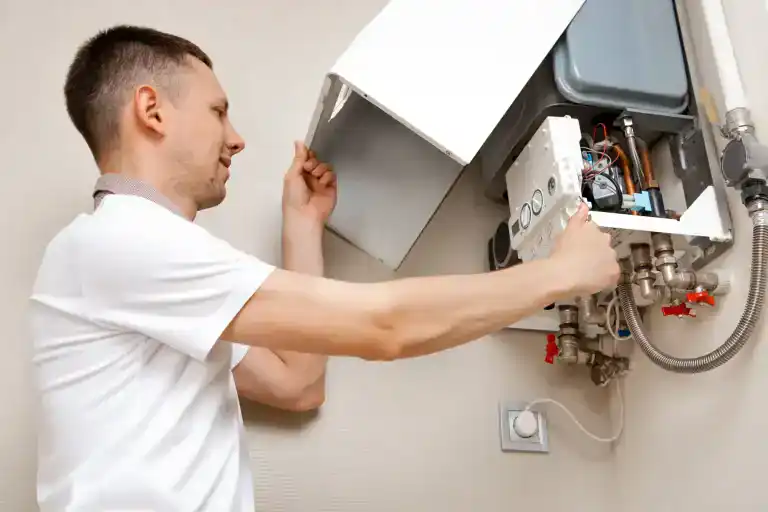
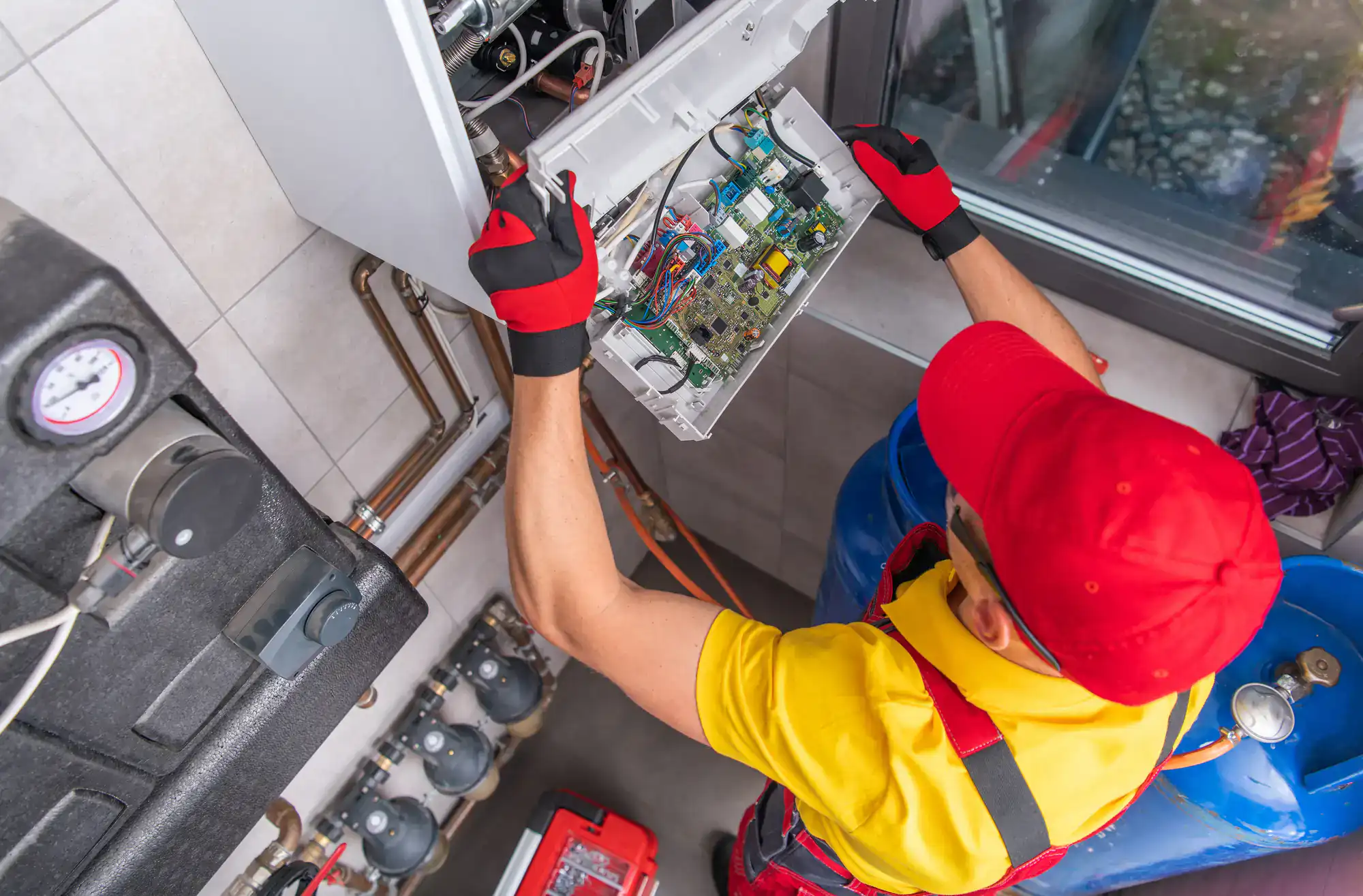
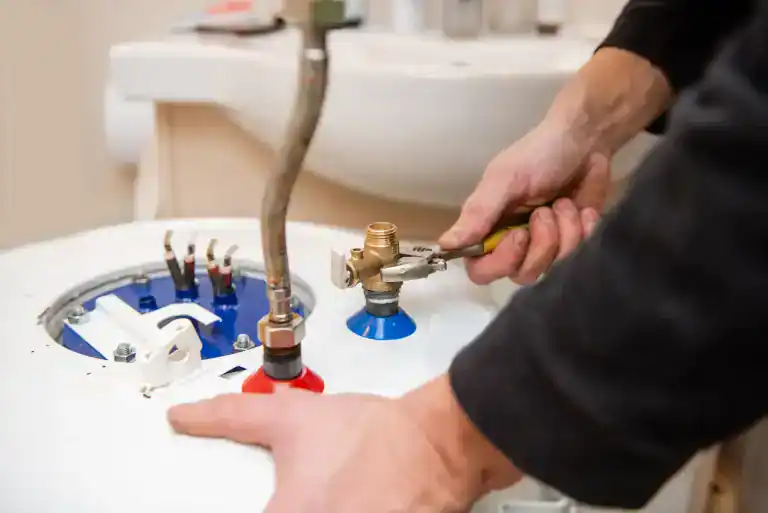
When the technician arrives, the first thing that happens is a real assessment. On a well-water property in the Traxler area, that means checking for sediment accumulation, inspecting the anode rod, testing the heating elements or pilot assembly depending on whether you have an electric or gas unit, and looking at the pressure relief valve and any visible corrosion on fittings. Hard water from the Floridan Aquifer does predictable damage in a predictable sequence — a technician who knows that can read your unit accurately and quickly.
Once the diagnosis is complete, you get a clear number before any work begins. If the repair makes financial sense, it gets done. If the unit is genuinely past the point of repair, you’ll hear that honestly — with a straight explanation of why, not a sales pitch. For replacements in unincorporated Alachua County, we handle the permit application through the county building department and coordinate the required inspection, so you don’t have to navigate that process yourself.
Ready to get started?
Water heater repair in the Traxler area covers the full range of what goes wrong — and what goes wrong out here on private well water is sometimes different from what a typical Gainesville service call looks like. Sediment-related failures, accelerated anode rod corrosion, and mineral buildup on heating elements are more common in this corridor than in areas served by treated municipal water. Those are the things a technician checks first, because they’re the most likely culprits.
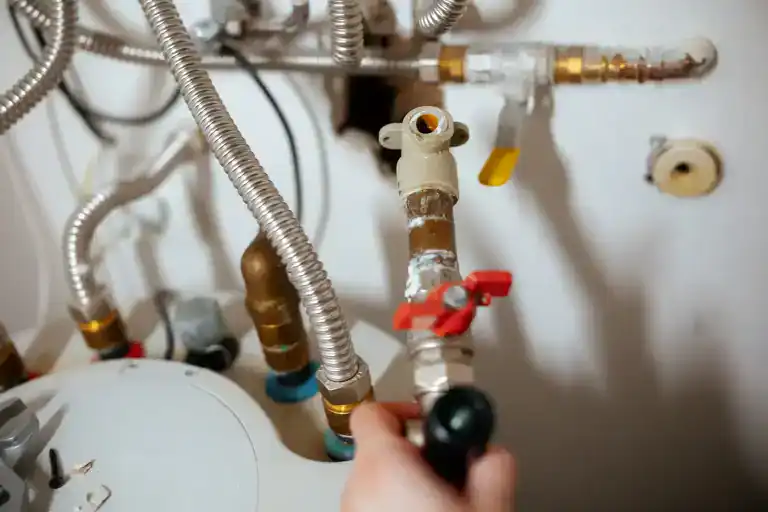
For emergency water heater repair — active leaks, burst tanks, water on the floor — the process starts with safety. On a well-water property, that means shutting off the well pump or the supply valve to the unit, cutting power or gas to the heater, and assessing whether the surrounding area has sustained water damage. A flooded utility room on a rural acreage property can involve more than just the water heater, and a qualified plumber looks at the whole picture.
We work on all major brands — Rheem, A.O. Smith, Bradford White, Navien, Rinnai, State, and others — and on both gas and electric systems, tank and tankless. Whether you have a 40-gallon electric tank that came with the property or a tankless gas unit you had installed three years ago, one call covers it. No hot water, leaking water heater, same-day repair — whatever the situation is when you pick up the phone, that’s what we address.
Yes — and it’s not a small difference. Homes in the Traxler area draw water from private wells tapping the Floridan Aquifer, which carries elevated levels of calcium and magnesium. That mineral content is what makes the water “hard,” and inside a water heater tank, those minerals don’t just pass through — they settle. Over time, a layer of calcium carbonate builds up on the bottom of the tank and coats the heating elements, forcing the unit to work harder to heat the same amount of water.
The practical result is reduced efficiency, higher energy bills, and a shorter overall lifespan for the unit. A water heater that might last 12 years on treated municipal water may start showing serious problems at 7 or 8 years on untreated well water. Regular sediment flushing and anode rod inspection can extend that timeline significantly — but many homeowners on rural properties don’t know to ask for it until something has already failed. If your water heater hasn’t been serviced in a few years and you’re on a private well, it’s worth having someone look at it before you’re dealing with a cold shower on a Sunday morning.
The honest answer is that it depends on the age of the unit, the nature of the failure, and the cost of the repair relative to what a replacement would run. A water heater that’s 6 years old with a failed thermostat or a burned-out heating element is almost always worth repairing — that’s a straightforward fix that costs a fraction of a new unit. A tank that’s 11 years old, actively leaking from a corroded seam, and has visible rust in the water is a different conversation.
Nationally, water heater repair costs typically run between $222 and $990 depending on what’s wrong, while a standard tank replacement runs $800 to $1,800 for parts and labor. The math usually favors repair when the unit is under 10 years old and the failure is component-based rather than structural. For homes in the Traxler area on private well water, that age threshold can be a little lower because hard water accelerates wear. A good technician will walk you through the numbers honestly and let you make the call — not push you toward the option that costs more.
Yes. Florida law requires a permit for water heater replacements, and for properties in unincorporated areas like Traxler, that permit is issued through the Alachua County Building Department — not a city building office, since Traxler has no municipal government. The permit process requires a licensed plumbing contractor to submit the application, and once the work is complete, the county schedules an inspection to confirm the installation meets code.
This matters more than most homeowners think about in the moment. Unpermitted water heater work can void your homeowner’s insurance coverage for related water damage claims, create problems when you go to sell the property, and in some cases result in fines if the work is discovered during a future inspection. We handle the permit application and inspection coordination as part of the job — you don’t need to navigate the county process yourself. If a contractor quotes you a lower price and skips the permit step, the savings aren’t real. They’re just deferred risk sitting in your utility room.
First, cut off the water supply to the unit. On a well-water property in the Traxler area, that means either shutting off the valve on the cold water line directly above or beside the water heater, or shutting off the well pump entirely if you can’t locate the supply valve quickly. Next, cut power or gas to the unit — turn off the breaker for an electric heater or set a gas unit to the pilot position. Do not leave a gas water heater running if there’s an active leak.
Once the immediate situation is stabilized, call for service. A leaking water heater is not something to wait on — water damage to a utility room, crawl space, or adjacent flooring compounds quickly, especially in Florida’s humidity. On a rural acreage property, a flooded utility room can also affect nearby systems like the pressure tank or electrical panel. A plumber who arrives and only looks at the water heater without checking the surrounding area is missing part of the picture. Make sure whoever you call is doing a full assessment, not just swapping the obvious part.
A few reasons. Traxler sits at the northern edge of Alachua County, just off I-75 at Exit 404, which puts it at the outer edge of most Gainesville-based plumbing companies’ comfortable service radius. Some providers quietly deprioritize rural north county calls in favor of denser routes closer to the city. Others simply aren’t staffed for weekends or after-hours calls — the most locally proximate plumbing company to Traxler operates Monday through Friday during standard business hours only, with no weekend availability.
That leaves a real gap on Saturday mornings, Sunday evenings, and holidays — exactly when water heater failures tend to surface, because that’s when households are home and running hot water at full demand. We dispatch same-day, seven days a week, including every holiday, and that availability is confirmed across multiple independent platforms — not just stated on a website. For a homeowner on County Road 236 or Old Bellamy Road without hot water on a weekend, that’s not a minor detail. It’s often the difference between getting help today and waiting until Monday.
The standard answer is 8 to 12 years for a traditional tank water heater, but that range assumes reasonably clean water and basic maintenance. For homes in the Traxler area drawing from the Floridan Aquifer, the realistic lifespan without maintenance is often closer to the lower end of that range — and sometimes shorter. The calcium and magnesium in the water don’t just build up in the tank; they accelerate corrosion on the anode rod, which is the component specifically designed to protect the tank lining from deteriorating. When the anode rod is consumed — which happens faster in hard water — the tank itself starts to corrode from the inside.
The good news is that regular maintenance genuinely extends the life of the unit. Annual sediment flushing, anode rod inspection every two to three years, and prompt attention to early warning signs — rumbling sounds, fluctuating water temperature, discolored water — can add years to a water heater’s functional life. If you’ve lived on a rural well-water property in north Alachua County for more than five years and your water heater has never been serviced, it’s worth scheduling a look before a failure forces the issue at the worst possible time.
Other Services we provide in Traxler