
Hear from Our Customers
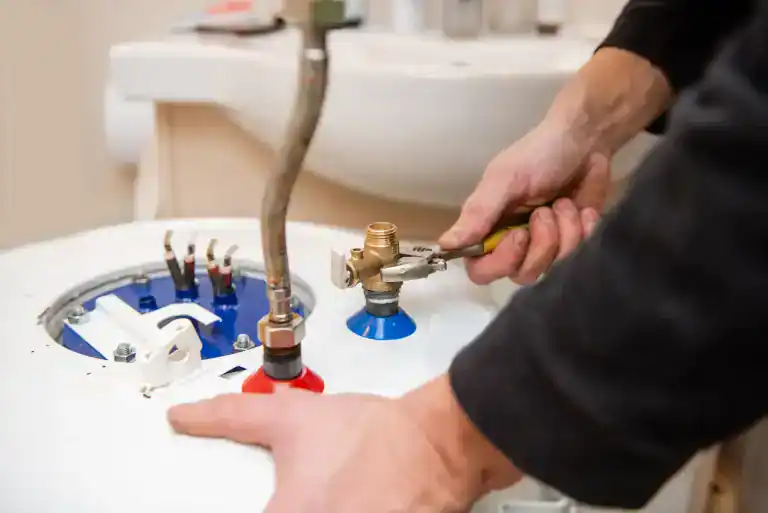
Cold showers are one thing. But in a rural home on well water around Hague, a failing water heater usually means something bigger is happening — sediment from the Floridan Aquifer has been quietly building up inside your tank for years, choking efficiency, spiking your energy bill, and wearing down components that were never designed to fight that level of mineral load. You might have noticed the popping and rumbling sounds, or the water taking longer to heat than it used to. That is not random. That is your tank telling you it has been working twice as hard to do the same job.
When the repair is done right, the difference is immediate. Hot water when you turn the tap. An energy bill that reflects what your unit is actually supposed to cost you to run — water heating accounts for roughly 14 to 18 percent of your home’s total energy use, so a struggling heater hits your wallet every single month. For homes in and around Hague that rely on private wells, getting the sediment flushed, the anode rod inspected, and the heating components back to spec is not just a comfort fix. It is a cost fix.
And if you have been putting off the call because you were not sure whether the unit needs a repair or a full replacement, that is exactly the kind of honest assessment you should expect before anyone starts work. Most water heater problems — a failed thermostat, a worn heating element, a corroded connection — are repairable. The job of a good technician is to tell you which one you are dealing with, not to default to the more expensive option.
We are a family-owned and operated plumbing company based out of Gainesville, serving the rural communities of North Central Florida — including Hague, the Deerhaven area, and the unincorporated Alachua County corridor along US 441. When the owner’s name is on the business, every job carries personal weight. There is no corporate complaint chain, no franchise manual, and no anonymous technician who disappears after the visit.
We hold a Florida state plumbing contractor license, carry full liability and workers’ compensation insurance, and pull permits through Alachua County for all applicable work. That matters more than people realize — unpermitted water heater work in unincorporated Alachua County can void your homeowner’s insurance and create real problems at resale. You get the work done right, documented right, and protected right.
Verified reviews on HomeAdvisor — a platform that requires confirmed job completion before a review posts — show a 5.0 rating and customers who reference technicians by first name. In a community the size of Hague, that kind of personal accountability is not a marketing detail. It is how trust actually works.
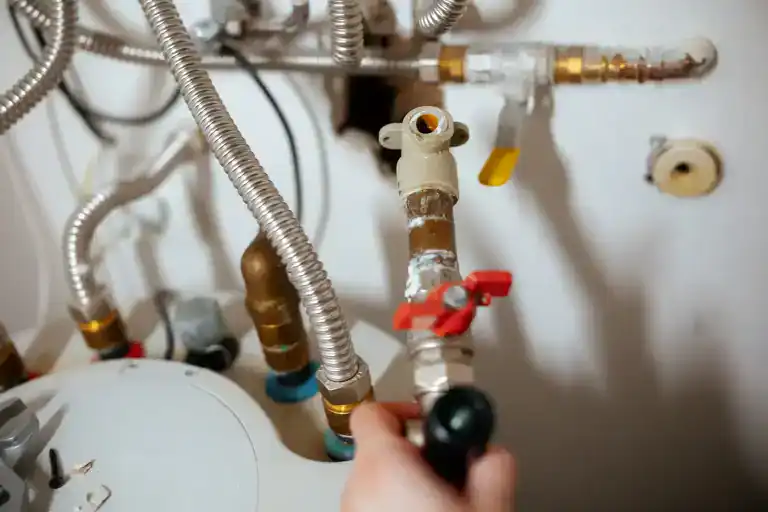
You call, and a real person picks up — not a voicemail, not an automated system, not a callback form. That is confirmed across Yelp, HomeAdvisor, and Angi, not just stated on our website. You describe what is happening, and you get a straight answer about whether it sounds like an emergency dispatch situation or a same-day scheduled call. Either way, we get a technician out to your property that day.
When the technician arrives, the first thing that happens is a full assessment of the unit — not a sales pitch. For homes in Hague on private well systems, that assessment includes checking for sediment accumulation from hard aquifer water, inspecting the anode rod, testing the thermostat and heating elements, and evaluating the pressure relief valve. You get a clear explanation of what is wrong and what it will cost to fix it before any work begins. No dispatch fee. No obligation until you have agreed to the repair.
If the repair is the right call, the work gets done that visit in most cases. If the unit is genuinely past the point of repair — typically a tank older than 12 years with significant corrosion or a cracked vessel — you will be told that plainly, with the reasoning behind it. Because Hague is in unincorporated Alachua County, any water heater replacement requires a permit through the county building department. We handle that process entirely, so you are covered from the first wrench turn to the final inspection.
Ready to get started?
Water heater repair in Hague covers the full range of what goes wrong with both tank and tankless units — gas and electric. Thermostat replacement, heating element repair, pilot light and igniter issues, pressure relief valve replacement, sediment flushing, anode rod service, and leak diagnosis are all on the table. For rural properties in this area dealing with hard well water from the Floridan Aquifer, sediment flushing and anode rod inspection are not optional add-ons — they are the maintenance work that determines whether your tank makes it to 12 years or fails at 8.
Leaking water heaters get special attention because the source of the leak changes everything. A leak from the pressure relief valve usually means pressure or temperature is running too high — often a thermostat issue. A leak from the bottom of the tank can signal internal corrosion, which is a different conversation entirely. A leak from fittings or connections is typically the most straightforward repair. You will know exactly what you are dealing with before any work begins, and the repair cost will be on the table upfront. National averages for water heater repair run between $222 and $990 depending on the issue — most component-level repairs land in the lower half of that range.
Same-day hot water heater repair in Hague, FL is the standard, not the exception. If you are dealing with no hot water, a burst water heater, or a flooded utility room, the 24/7 line is live and we dispatch the same day — including weekends and holidays.
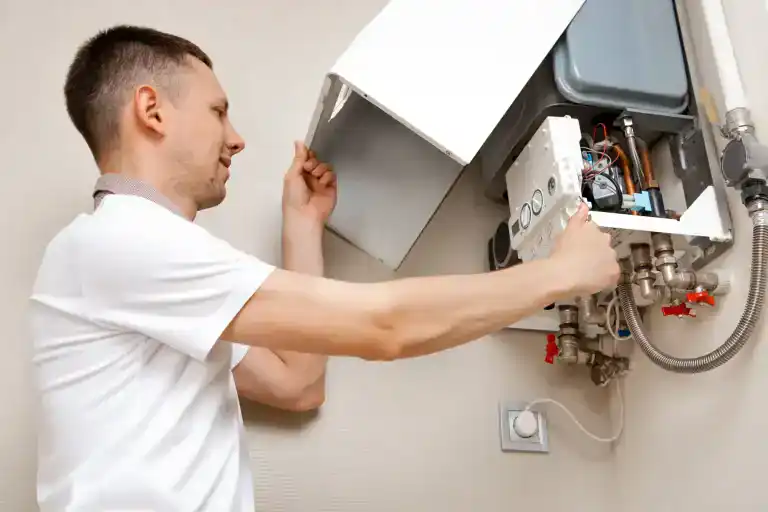
Not always — and the honest answer depends entirely on where the leak is coming from. A leak at the pressure relief valve is usually a sign that the temperature or pressure inside the tank is running too high, which is commonly traced back to a faulty thermostat. That is a repair, not a replacement. A leak at the inlet or outlet connections, or at fittings along the supply lines, is also typically repairable. Where things get more serious is a leak originating from the bottom of the tank itself — that often indicates internal corrosion, and once the tank wall is compromised, repair is not a realistic option.
For homes in and around Hague that pull from private wells connected to the Floridan Aquifer, internal corrosion tends to happen faster than it does in homes on treated municipal water. The high mineral content in that well water accelerates wear on the tank lining and the anode rod, which is the sacrificial component designed to absorb that corrosion before it reaches the tank. If the anode rod has never been serviced and the tank is past eight or nine years old, a bottom leak is more likely to mean replacement. A technician can tell you within the first visit which situation you are in.
The honest range for water heater repair nationally runs from about $222 on the low end to around $990 for more involved work, with an average landing near $606. Most single-component repairs — a thermostat, a heating element, a pressure relief valve — fall in the lower half of that range, typically $150 to $350 depending on the part and the unit. More complex repairs involving multiple components or significant sediment buildup can push higher.
What affects cost in Alachua County specifically is the condition of the unit going in. Homes in the rural corridor around Hague that have been running on hard well water without routine maintenance tend to have more accumulated sediment and more wear on internal components than homes on treated city water. That does not automatically mean a higher repair bill — it means a more thorough assessment is needed before a number is on the table. We provide free estimates with no dispatch fee, so you know what the repair will cost before you commit to anything. No surprises, no obligation until you have agreed.
First, shut off the water supply to the unit. There is a cold water shutoff valve located on the pipe feeding into the top of the tank — turn it clockwise to close it. That stops new water from entering and limits how much ends up on your floor. Next, cut power to the unit. For an electric water heater, go to your breaker panel and flip the breaker labeled for the water heater. For a gas unit, turn the gas valve on the unit itself to the off position — do not leave a gas water heater running if there is active flooding around it.
Once the immediate situation is controlled, call for emergency water heater repair. A burst or heavily leaking water heater in a rural property like those in Hague can cause significant structural damage if water sits on subfloor or reaches crawl space framing. Water damage is the second most common homeowner insurance claim in the country, and acting fast limits both the damage and the claim. We dispatch same-day for flooded water heater situations — 24 hours a day, including weekends and holidays — so do not wait until Monday morning if this is happening now.
Almost certainly related to sediment, yes — and if your home draws from a private well connected to the Floridan Aquifer, you are dealing with one of the harder water sources in North Central Florida. The calcium and magnesium dissolved in that aquifer water settle at the bottom of your tank over time and form a layer of mineral scale. When your heating element tries to heat water through that sediment layer, it superheats pockets of water trapped underneath, and that is what produces the popping, rumbling, or cracking sounds you are hearing.
Beyond the noise, that sediment layer is forcing your heating element to work significantly harder to reach temperature, which shows up as higher energy bills and longer recovery times between uses. Left unaddressed, it accelerates corrosion of the tank lining and shortens the unit’s overall lifespan. A sediment flush — where the tank is drained and the buildup is cleared — can restore efficiency and quiet the unit down considerably if caught before the damage is too far along. This is one of the most common and most preventable water heater issues for rural homes around Hague, and it is something a technician can assess and address in a single visit.
Age is the first factor. Standard tank water heaters have a realistic lifespan of 8 to 12 years, and about 75 percent of units fail before hitting that 12-year mark. If your unit is under 8 years old and experiencing a problem, repair almost always makes financial sense — you have years of useful life left in the tank. If it is between 8 and 12 years old, the decision depends on what is wrong and what the repair costs relative to a new unit. If it is past 12 years, replacement is usually the smarter long-term move even if the repair itself is modest, because more failures are likely to follow.
The condition of the tank matters as much as the age. Internal corrosion, a cracked tank vessel, or a compromised tank lining are not repairable — those are replacement situations. Component failures — thermostats, heating elements, pressure relief valves, anode rods — are almost always repairable and typically cost a fraction of a new unit. For homes in Hague on well water, the mineral load from the Floridan Aquifer can age a tank faster than the calendar suggests, so a thorough internal assessment is worth doing before assuming the unit has years left. A good technician will give you a straight read on which side of that line you are on.
Yes — and this is worth being direct about, because not every plumber who lists Alachua County as a service area will actually dispatch to a rural address off CR 237 or US 441 without adding surcharges or pushing the appointment to later in the week. We serve Hague and the surrounding unincorporated corridor as a standard part of our service area, same day, with no additional fees for the rural location. The 24/7 line is live — confirmed on Yelp, HomeAdvisor, and Angi — and we dispatch the same day regardless of whether it is a weekday, weekend, or holiday.
Hague is a small community. Until recently, the nearest fire station was five miles away in Alachua — the county just opened the first-ever Engine 25 Hague Station on US 441 to close that gap. The same geographic reality that made emergency response slower here for years applies to trade services. A plumber who commits to same-day dispatch for a property on CR 237 is not just making a scheduling promise — we are filling a real service gap that rural homeowners in this area have navigated for a long time. That commitment is the reason Hague residents call us and refer their neighbors.
Other Services we provide in Hague