
Hear from Our Customers
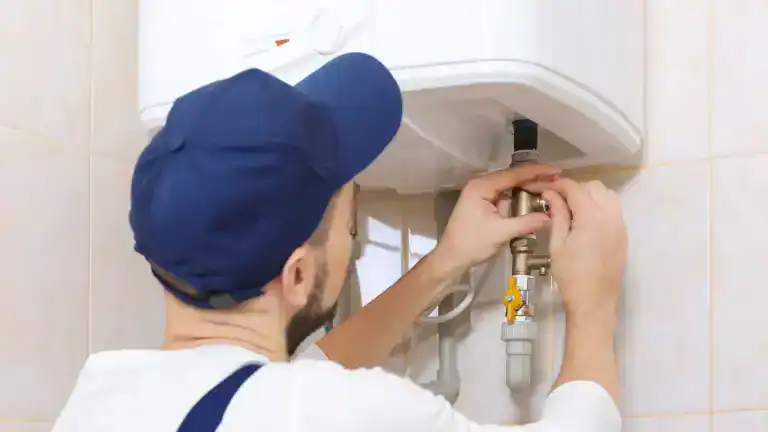
Hot water on demand sounds basic — until you’ve gone without it. Once that old, struggling unit is out and a properly installed replacement is running, the difference is immediate. No more lukewarm showers, no more waiting for the tank to catch up, and no more watching a puddle slowly grow on your utility room floor.
Here’s what most Gainesville homeowners don’t realize until a plumber tells them: the water coming out of your GRU tap registers around 8.2 grains per gallon in hardness. That’s on the moderately hard to hard end of the scale, and it means sediment and mineral scale have been building up inside your tank for years — forcing the heating element to work harder, driving up your energy bill, and grinding down the unit’s lifespan faster than the national average would suggest. Add in Gainesville’s year-round humidity, which accelerates rust and corrosion on the tank’s exterior, and you’ve got two local factors working against your water heater simultaneously.
A new unit — properly sized, correctly installed, and permitted through Alachua County — doesn’t just give you hot water back. It gives you lower energy costs, a unit that’s built to handle what Gainesville’s water actually throws at it, and the peace of mind that comes from knowing the job was done right the first time.
We hold a verified 5.0 star rating across Angi and HomeAdvisor — not because it was handed to us, but because every customer who’s called has walked away satisfied. Real reviews from real Gainesville customers use words like “cost friendly,” “on time,” and “my go-to plumber.” That kind of language doesn’t come from a marketing campaign. It comes from showing up and doing the work right.
We’re a licensed Florida plumbing contractor, which matters more than most people realize. In Gainesville and throughout Alachua County, water heater replacement requires a permit — and only a DBPR-licensed contractor can legally pull one on your behalf. Whether you’re in a 1940s Duckpond bungalow with original plumbing or a Haile Plantation home that’s quietly hitting the 30-year mark, we know what your home needs and handle every step, including the permit and inspection, so you don’t have to.
We’re available every day of the week, including weekends and holidays, with free estimates and no obligation to move forward until you’re ready.
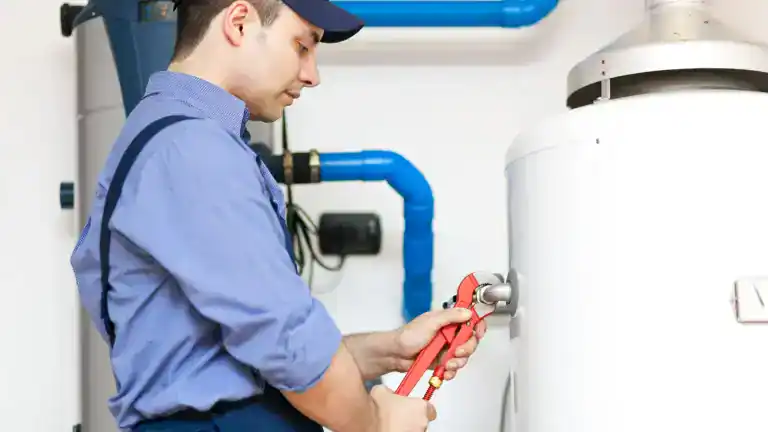
It starts with a call. When you reach out to us, we’ll ask a few straightforward questions about your current unit — the age, the symptoms, whether it’s gas or electric, and where it’s installed. From there, we can usually give you a clear picture of what you’re looking at before anyone even shows up at your door. The estimate is free, and there’s no pressure to commit on the spot.
Once you’re ready to move forward, a licensed technician comes out, assesses the full situation in person, and confirms the right replacement unit for your home’s setup and your household’s actual hot water demand. In Gainesville, every water heater replacement requires a plumbing permit through the City of Gainesville or Alachua County’s Building Division — we handle that entirely. You don’t need to call the county or figure out the permitting portal. That’s our job, not yours.
The old unit gets disconnected, removed, and hauled away. The new one goes in, gets inspected, and gets signed off. When the technician leaves, you have hot water, a completed permit, and nothing left to deal with. Same-day service is available for most residential replacements, including emergency calls for leaking or burst tanks.

Ready to get started?
We handle the full scope of residential water heater removal and replacement in Gainesville — gas tank, electric tank, and tankless systems. If you’re considering making the switch to tankless, we’ll tell you honestly whether your existing gas line capacity and installation space can support it, and give you a real comparison of long-term costs before you decide. No upsell, just the information you need to make the right call.
Every replacement includes old water heater haul away and replacement as part of the service. That 50-to-80-gallon steel tank doesn’t end up in your garage or on your curb — it leaves with the technician. For Gainesville landlords managing rental properties near campus or along the Archer Road corridor, that matters. One call handles the whole job, start to finish, without creating a secondary disposal problem between tenants.
Florida’s plumbing code requires that every replacement include a properly rated Temperature and Pressure Relief valve with a full-size discharge pipe terminating within six inches of the floor or to an approved drain. That’s not optional, and it’s not something to skip to save time. Every installation we perform meets Florida Building Code standards and passes the required Alachua County inspection before the job is considered done. That’s what a permitted, licensed replacement actually looks like.
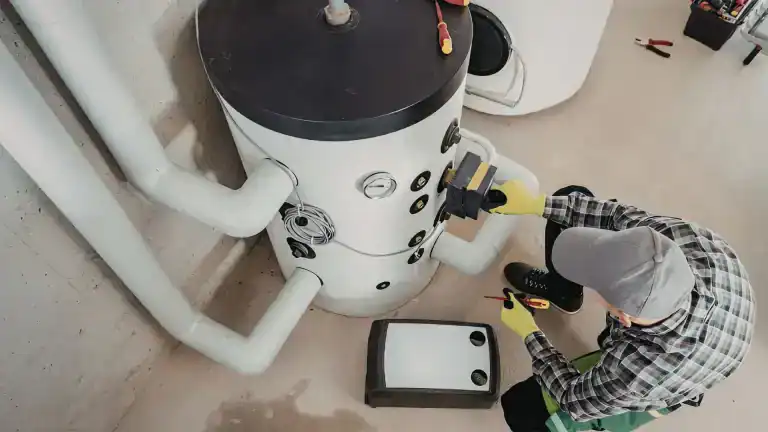
Yes — water heater replacement in Gainesville requires a plumbing permit, and that requirement applies whether you’re in the city limits or in unincorporated Alachua County. This isn’t a technicality that gets overlooked. It’s a real requirement that affects your homeowner’s insurance coverage and your ability to sell your home down the road. Unpermitted work can void your policy and surface as a problem during a home inspection.
The permit process involves submitting the application, having the installation inspected by a licensed inspector, and receiving a certificate of completion before the unit is considered legally in service. Only a licensed Florida plumbing contractor — licensed through the DBPR — can pull this permit on your behalf. We handle the entire permit and inspection process as part of every replacement, so you’re not left navigating Alachua County’s Building Division on your own.
The honest answer depends on a few things: the age of the unit, the nature of the problem, and what a repair would actually cost relative to a new installation. The general benchmark used across the plumbing industry is that if a repair is going to run 50% or more of what a replacement would cost, replacement is the smarter financial move. At that point, you’re spending significant money on a unit that’s still aging and still going to fail.
In Gainesville specifically, that calculation tips toward replacement a little sooner than it might elsewhere. The combination of GRU’s moderately hard water — around 8.2 grains per gallon — and the city’s high ambient humidity accelerates wear on both the interior and exterior of the tank. A unit that’s eight or nine years old and showing symptoms here may be closer to end of life than the same unit in a drier, softer-water city. When we assess your water heater, we’ll give you a straight answer on whether a repair makes sense or whether you’d be better off putting that money toward a new unit.
A leaking water heater needs to be treated as an urgent situation, not a “schedule it for next week” problem. If the tank is actively leaking, turn off the cold water supply valve above or beside the unit and, if it’s a gas heater, turn off the gas supply at the shutoff valve near the unit. For electric heaters, cut power at the breaker. This stops the situation from getting worse while you wait for a plumber to arrive.
In Gainesville’s climate, water that pools around a failed tank can start promoting mold growth in walls, flooring, and nearby structures faster than it would in a drier environment. The high humidity here means there’s already moisture in the air — add standing water from a leaking tank and the conditions for mold accelerate quickly. We offer 24/7 emergency water heater installation in Gainesville, FL, available every day of the week including weekends and holidays. Same-day service is available for burst and leaking tank replacements, so you’re not left managing water damage overnight while you wait for a Monday morning appointment.
For a standard tank-style water heater replacement in Gainesville — gas or electric — most homeowners are looking at somewhere in the range of $800 to $1,500, depending on the unit size, fuel type, and complexity of the installation. If you’re replacing an older unit in a historic home like those in the Duckpond neighborhood, where the existing plumbing configuration may require additional work, or if you’re upgrading to a tankless system, costs can run higher — tankless installations typically fall between $1,400 and $3,900.
The best way to get an accurate number for your specific situation is to get an estimate before committing to anything. We offer free project estimates with no obligation, which means you can find out exactly what your replacement will cost without spending a dollar to get that information. Pricing factors that affect the final number include the water heater type and capacity, whether any code updates are required as part of the installation, and whether the existing gas line or electrical setup needs any modifications to support the new unit.
A standard tank-style water heater has a general lifespan of six to fifteen years, with gas units typically averaging eight to twelve years under normal conditions. In Gainesville, “normal conditions” include two factors that put extra stress on water heaters compared to what those national averages assume. First, GRU’s water supply carries a hardness level of around 140 mg/L as calcium carbonate — that’s 8.2 grains per gallon — which causes mineral scale to accumulate inside the tank over time, reducing efficiency and wearing down the heating components. Second, Gainesville’s year-round humidity accelerates corrosion on the tank body and fittings.
The practical takeaway is that a water heater installed in a Gainesville home may reach the end of its useful life on the earlier end of that range, not the later end. Tankless water heaters handle these conditions better in some respects and can last 20 years or more, though the upfront cost is higher. Regular maintenance — particularly flushing the tank annually to remove sediment buildup — can extend the life of a tank-style unit, but at some point replacement is simply the better investment. A licensed plumber can assess your current unit and tell you where it actually stands.
In most cases, yes. We offer same-day water heater replacement in Gainesville, FL and are available seven days a week, including weekends and holidays. For emergency situations — a burst tank, an active leak, or a complete failure with no hot water — same-day service is the standard, not an exception. When you call, we’ll confirm availability and get a technician dispatched as quickly as possible.
This matters especially for Gainesville’s large rental property market. Landlords managing units near the University of Florida campus, along the Archer Road corridor, or in older neighborhoods throughout the city know that a tenant without hot water is a legal liability under Florida law — and a fast turnover problem if it’s between tenants. Same-day availability means the situation gets resolved before it escalates. For homeowners, it means you’re not spending two or three days without hot water waiting for a scheduled appointment. Our free estimate process is also fast — you can get a clear picture of cost and timeline in the same call, with no obligation to move forward until you’re ready.
Other Services we provide in Gainesville