Water flooding your home and no idea where the shut-off is? This guide walks you through exactly what to do — fast — before the damage gets worse.
Water is spreading across your floor. A pipe has burst, a fitting has failed, or something under the sink just let go — and every second you spend searching for the shut-off is more damage, more cost, more stress. One inch of floodwater can cause up to $25,000 in home damage. Knowing exactly where your main water shut-off valve is — and how to use it — is one of the most practical things a homeowner can do. This guide will walk you through everything, with context specific to homes right here in Alachua County, FL.
The process itself isn’t complicated — but it’s hard to figure out under pressure if you’ve never done it before. The goal is simple: get to the main shut-off valve and close it before more water enters the home.
Start by staying calm and moving quickly to where the valve is most likely located. Once you find it, turn it clockwise to close. After shutting it off, open a faucet somewhere in the house to release any remaining pressure in the lines. Then confirm the water has actually stopped flowing before you assess the damage. If the situation continues or you need immediate assistance, an emergency plumber can help prevent further water damage.
What trips most people up isn’t the process — it’s not knowing where the valve is in the first place. That’s where Alachua County homes have a specific wrinkle worth understanding.
If you’ve ever searched “check your basement for the shut-off valve” and felt confused, that’s because most of that advice wasn’t written for Florida. The vast majority of homes in Gainesville and throughout Alachua County are built on concrete slab foundations — no basement, no crawl space. The valve locations here are different, and if you’re looking in the wrong place during an emergency, you’re losing time you don’t have.
In most Alachua County homes, your main shut-off valve is outside, near the front of the property. Gainesville Regional Utilities — GRU — installs a ground-level utility box, sometimes called a meter box, typically set flush with the ground near the street or sidewalk. Inside that box, you’ll find the water meter and a curb stop valve. That curb stop is a backup option, but it requires a special meter key tool to operate, and the utility-side of that meter belongs to GRU — not you. More on that in a moment.
The shut-off valve you actually own and should use first is usually located one of two places: on an exterior wall of your home near where the water line enters, or inside the home near the water heater or in a utility closet. Older homes in established Gainesville neighborhoods — think properties built in the 1960s through the 1990s — often have their interior valve tucked into a small utility space or mechanical room. If you haven’t located yours yet, do it now, before there’s water on the floor.
One more thing worth knowing: if your home was built before the early 2000s, there’s a reasonable chance your main shut-off is a gate valve — the round, wheel-style handle that requires multiple full turns to close. Newer homes typically have ball valves, which use a lever handle and close with a simple quarter-turn. Ball valves are faster and far more reliable in an emergency. If yours is an older gate valve, we recommend having a plumber take a look at it during your next service visit.
This is the scenario nobody talks about enough — and it’s more common than you’d think, especially in Gainesville’s older housing stock. You find the valve, you try to turn it, and it doesn’t move. Maybe it budges slightly. Maybe it’s completely frozen in place.
Do not force it. That’s the most important thing to understand here. A gate valve that’s been sitting untouched for years can corrode or seize, and forcing it with too much pressure can snap the valve stem. If that happens, the valve is permanently open and you’ve lost your ability to shut off the water at all — turning a manageable leak into a much bigger problem.
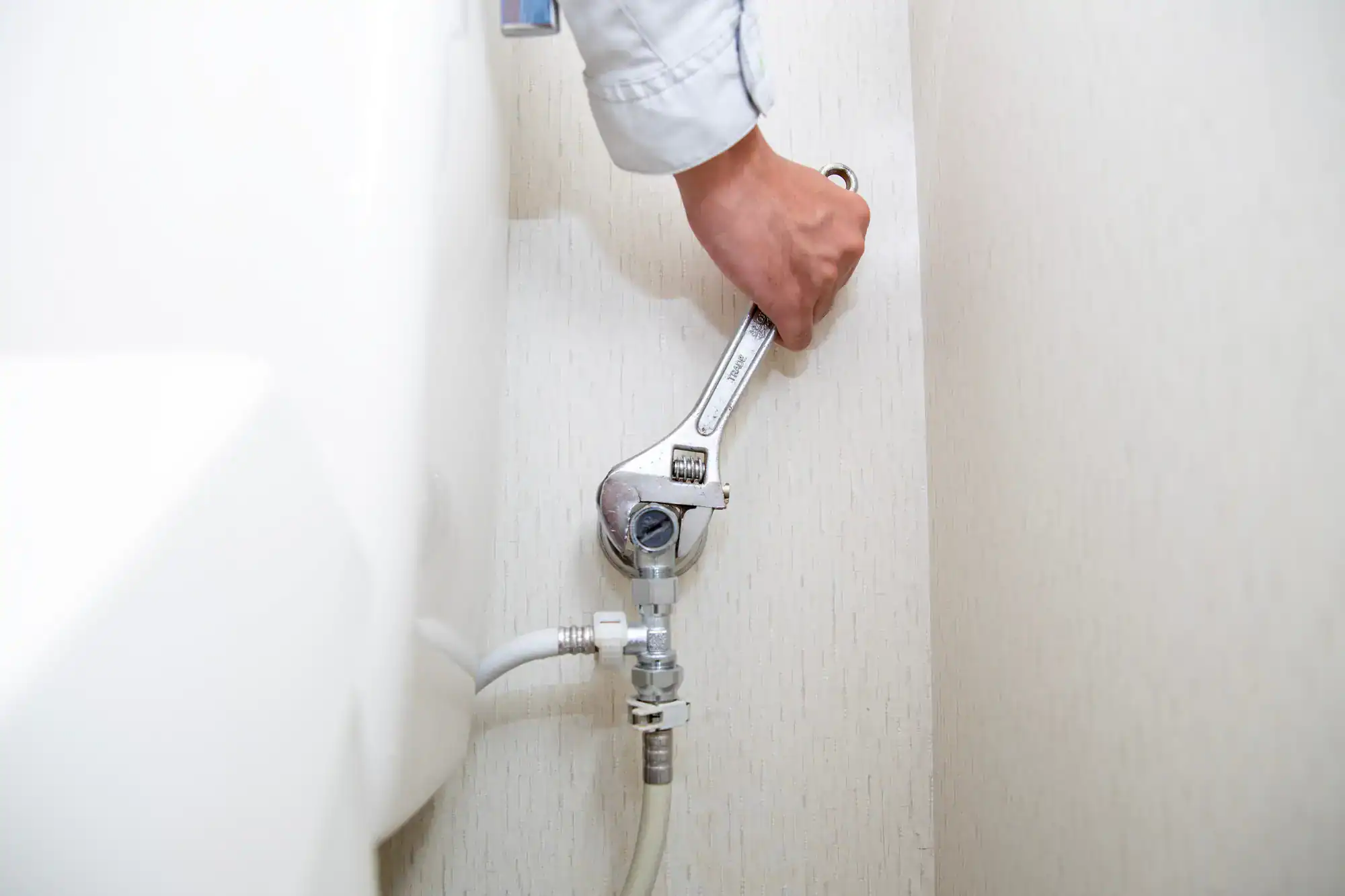
If the valve is stiff but not completely stuck, try applying penetrating oil like WD-40 to the stem, waiting a few minutes, and then attempting a slow, steady turn. Gentle pressure, not force. If it still won’t move, stop and move to your backup option: the curb stop in the GRU meter box near the street. You’ll need a meter key — a simple tool available at most hardware stores — to operate it. Turn the curb stop valve so it runs perpendicular to the pipe, and water flow to the house will stop.
After the immediate crisis is handled, call a licensed plumber to assess the main shut-off valve. A valve that seized during an emergency is a valve that needs to be replaced. In Florida’s climate — high humidity, mineral-rich water, and year-round heat — gate valves degrade faster than in cooler climates. Upgrading to a ball valve is a straightforward job for a licensed plumber and gives you a shut-off you can actually rely on when it matters. We’ve replaced dozens of these in Alachua County homes, and it’s one of those small investments that pays for itself the first time you actually need it.
Want live answers?
Connect with a Dee Rooter Plumbing expert for fast, friendly support.
Finding your valve is step one. Keeping it functional is step two — and most homeowners skip it entirely until something goes wrong.
The fix is simple: test your main shut-off valve at least once a year. Turn it fully off, then fully back on. That’s it. This prevents the valve from seizing due to disuse, which is the primary reason shut-off valves fail at the worst possible moment. If you want a natural reminder, tie it to hurricane season prep — every June, before the season kicks in, test your valve, confirm its location, and make sure every adult in your household knows where it is.
If you own rental property near UF, this matters even more. When a tenant calls about a burst pipe, you may not be on-site to respond. Making sure your tenants know where the shut-off is — and that the valve actually works — can be the difference between a manageable repair and a gutted unit.
Once a year is the minimum. Twice a year is better, especially in homes with older plumbing. The reason this matters is straightforward: a valve that never gets operated will eventually stop operating. Gate valves in particular are prone to mineral buildup from hard water, and Alachua County’s water supply — like much of north-central Florida — carries enough dissolved minerals to cause real buildup over time. That buildup is what freezes a gate valve in place.
When you test the valve, you’re doing more than just confirming it moves. You’re also checking for slow drips around the valve body when it’s closed, which can indicate a worn-out seal. You’re checking that the handle or wheel turns smoothly without grinding. And you’re giving yourself the chance to notice corrosion or deterioration before it becomes an emergency.
If your valve shows any of those signs — stiff movement, dripping when closed, visible rust or mineral deposits — don’t wait for a problem to force the issue. A valve replacement done proactively is a planned expense. A valve replacement done during an active flood is an emergency expense, and those always cost more. We’ve seen homeowners in Newberry, High Springs, and Archer deal with exactly this situation — a valve that looked fine until the moment it wasn’t. The repair itself is straightforward; it’s the water damage that piles up while waiting.
It’s also worth making sure every adult in your household knows where the shut-off valve is and how to use it. Write it down. Show your kids. If you own a rental near the University of Florida, tell your tenants. That thirty-second conversation could save thousands of dollars.
Not every shut-off valve needs to be replaced on a schedule, but there are clear signs that yours has reached the end of its useful life. The most obvious one: it’s a gate valve that’s been in place since the home was built and hasn’t been serviced in years. If your Alachua County home was built before 2000 and you’ve never had the main shut-off valve looked at, that’s a reasonable place to start a conversation with a plumber.
Beyond age, look for these indicators. If the valve drips or seeps when fully closed, the internal seat or seal is worn and water will continue to enter the home even in the “off” position — that’s a problem. If the handle requires significant effort to turn, or if you can feel grinding resistance, the valve internals are deteriorating. Visible corrosion on the valve body, especially where the stem meets the housing, is another sign that the valve is compromised.
Replacing a main shut-off valve isn’t a DIY project for most homeowners. It requires shutting off water at the curb stop, working with the main supply line under pressure, and in some cases pulling a permit depending on the scope of the work. Florida’s licensing requirements exist for exactly this reason — plumbing contractors are required to carry a state-issued license, pass both trade and business management exams, and complete continuing education every two years. When someone is working on your water main, you want that credential in place.
The good news is that replacing a gate valve with a modern ball valve is typically a straightforward job. Ball valves are more reliable, easier to operate, and built to last. After working in homes across Alachua County — from older Duck Pond bungalows to newer builds in Newberry — we can tell you that a functioning, modern shut-off valve is one of the simplest things you can do to protect your home from water damage. It’s not glamorous plumbing work, but it matters more than most homeowners realize until they actually need it.
The most common question we hear: “Where exactly is my shut-off valve?” In Gainesville and across Alachua County, the answer is almost always outside near the GRU meter box or inside near the water heater — not in a basement. Florida homes are built differently, and the standard advice from national sources often doesn’t apply here.
The second most common situation: a valve that won’t turn during an emergency. If that happens to you, don’t force it. Use the curb stop as a backup, then call a licensed plumber to assess and replace the valve before the next emergency arrives.
If you’ve read this far and realized you’re not sure where your valve is, or you know it hasn’t been tested in years, that’s worth addressing now rather than later. We’re available 24/7 — same-day service, upfront pricing, and a crew that’s been working in Alachua County homes long enough to know exactly what we’re looking at. Give us a call at 888-588-1148.
Summary:
Article details:
Share: