A water leak doesn't wait for a convenient time. Here's exactly what to do — and who to call — when it happens in your Alachua County home.

Water on the floor. A ceiling that’s dripping. A pipe that sounds wrong. Whatever tipped you off, you’re here because something is happening and you need to know what to do next. The good news is that a fast, calm response can stop a bad situation from becoming a much worse one. This guide covers exactly that — the first steps to take, how to cut off the water supply, what kinds of leaks need a professional immediately, and how to protect your home from the kind of damage that quietly compounds while you wait. If you’re in Alachua County and you need help right now, we’re available around the clock.
The moment you discover an emergency water leak, the instinct is to panic. Resist it. The first thing to do is stop the flow — and that means finding your main water shutoff valve and turning it off before anything else. Once the water is off, you’ve bought yourself time to assess the damage without it getting worse by the minute.
After the water is off, move anything that’s at risk — furniture, electronics, documents — out of the affected area. Take photos of everything before you touch it. This matters more than most people realize, because if you’re filing a homeowner’s insurance claim, documentation from before the cleanup begins is what supports your case. Insurance typically covers sudden and accidental water damage, like a burst pipe, but not gradual leaks or damage from deferred maintenance.
Then call us. Not after you’ve tried to patch it yourself, not in the morning if it’s happening at night. In Gainesville’s subtropical climate, mold can begin growing within 24 to 48 hours of water exposure. The faster we assess and repair the source, the lower your total cost.
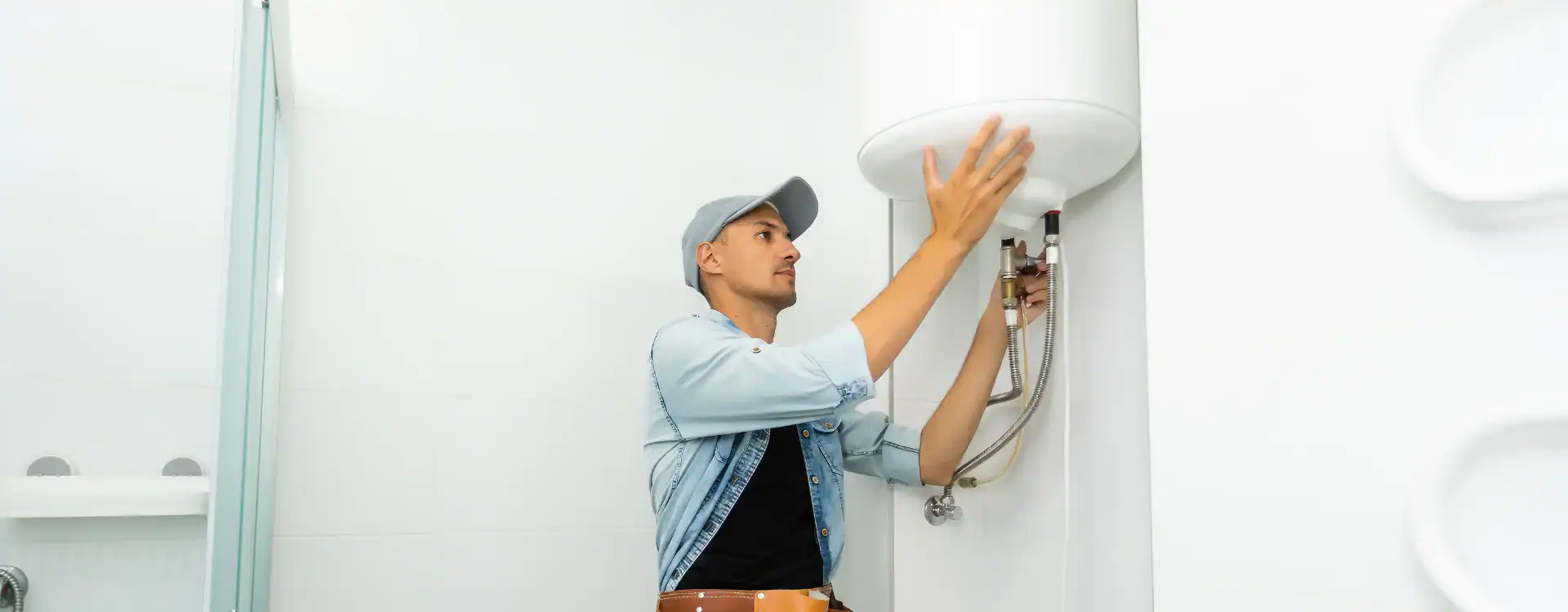
Most homeowners have never actually located their main water shutoff valve until the moment they desperately need it. Don’t let that be you. In most Alachua County homes, the main shutoff is near the water meter — often in a utility closet, the garage, a crawl space, or along an exterior wall facing the street. In older homes in established Gainesville neighborhoods like Duck Pond or the NW 6th Street corridor, it’s not uncommon for the valve to be tucked away in a spot that hasn’t been touched in decades.
There are two common valve types. A gate valve looks like a round wheel handle and closes by turning it clockwise — sometimes several full rotations. A ball valve has a lever handle and closes by rotating it 90 degrees so it sits perpendicular to the pipe. Ball valves are faster and more reliable; gate valves can seize up if they haven’t been operated in years, which is a real possibility in homes built in the 1970s and 1980s.
If you can’t find the main shutoff or it won’t turn, there’s a secondary option: the shutoff at the water meter itself, located near the street or sidewalk. This typically requires a meter key or a flat-head screwdriver. In a true emergency, this is your backup.
For individual fixtures — a leaking toilet, a burst supply line under a sink — there are usually isolation valves right at the fixture. Turning those off limits the problem to one area without cutting water to the whole house. Knowing where these are before an emergency happens is one of the simplest things you can do to protect your home.
One more thing worth noting: if you’re in a rental property and the shutoff is inaccessible or the valve is broken, that’s a landlord responsibility — but it doesn’t mean you wait. Call us, document everything, and sort out the liability conversation afterward. Water doesn’t pause for property disputes.
The shutoff valve conversation leads naturally to a question worth asking: what happens when a pipe bursts while you’re at work, asleep, or out of town? In that scenario, every hour before someone notices is an hour of water damage accumulating inside your walls, under your floors, and into your home’s structure.
Smart water shutoff devices solve this problem. These are whole-home systems — brands like Flo by Moen and Phyn Plus are among the most well-known — that monitor your home’s water flow continuously. When they detect an abnormal flow pattern that suggests a leak, they alert you via your smartphone and, depending on the settings, automatically shut off the main water supply before significant damage occurs.
For homeowners in Alachua County, this technology is especially relevant. The combination of older housing stock, Florida’s year-round humidity, and a hurricane season that runs from June through November creates a higher-than-average risk environment for water damage. Many homes in established Gainesville neighborhoods were built with pipes that are now 40 to 60 years old. Polybutylene pipes — common in homes built between 1978 and 1995 — are particularly prone to sudden failure. A smart shutoff system won’t stop a pipe from aging, but it can stop a failure from turning into a catastrophe.
Installation is straightforward. We install the device on the main water line, typically near where it enters the house, and connect it to your home’s Wi-Fi. Setup takes a few hours at most. After a short learning period where the system maps your household’s normal water usage patterns, it becomes an always-on layer of protection that most homeowners quickly forget is there — until it saves them from a $15,000 insurance claim.
If you’re managing a rental property near UF campus or anywhere else in Alachua County, smart shutoff technology is worth a serious look. Tenant-caused leaks and deferred maintenance issues are among the most common sources of water damage claims on rental properties, and a system that can catch a problem at 3am is worth far more than its installation cost.
Want live answers?
Connect with a Dee Rooter Plumbing expert for fast, friendly support.
Not every drip is a crisis. But some situations need a professional immediately, and knowing the difference matters. A slow drip from a faucet can wait for a scheduled appointment. A burst pipe, a sewer backup, or a water heater that’s actively leaking cannot.
Burst pipes are the most urgent. Whether caused by a sudden pressure spike, a corroded joint, or — during one of Gainesville’s rare hard freezes — ice expansion in an exposed line, a burst pipe can release dozens of gallons per minute into your home. Fixture failures, like a toilet supply line that lets go or a washing machine hose that bursts, are similarly fast-moving. Appliance malfunctions — a water heater that’s leaking from the base, a dishwasher that’s flooding the kitchen — fall into the same category. These are situations where every minute without professional intervention increases both the damage and the cost.
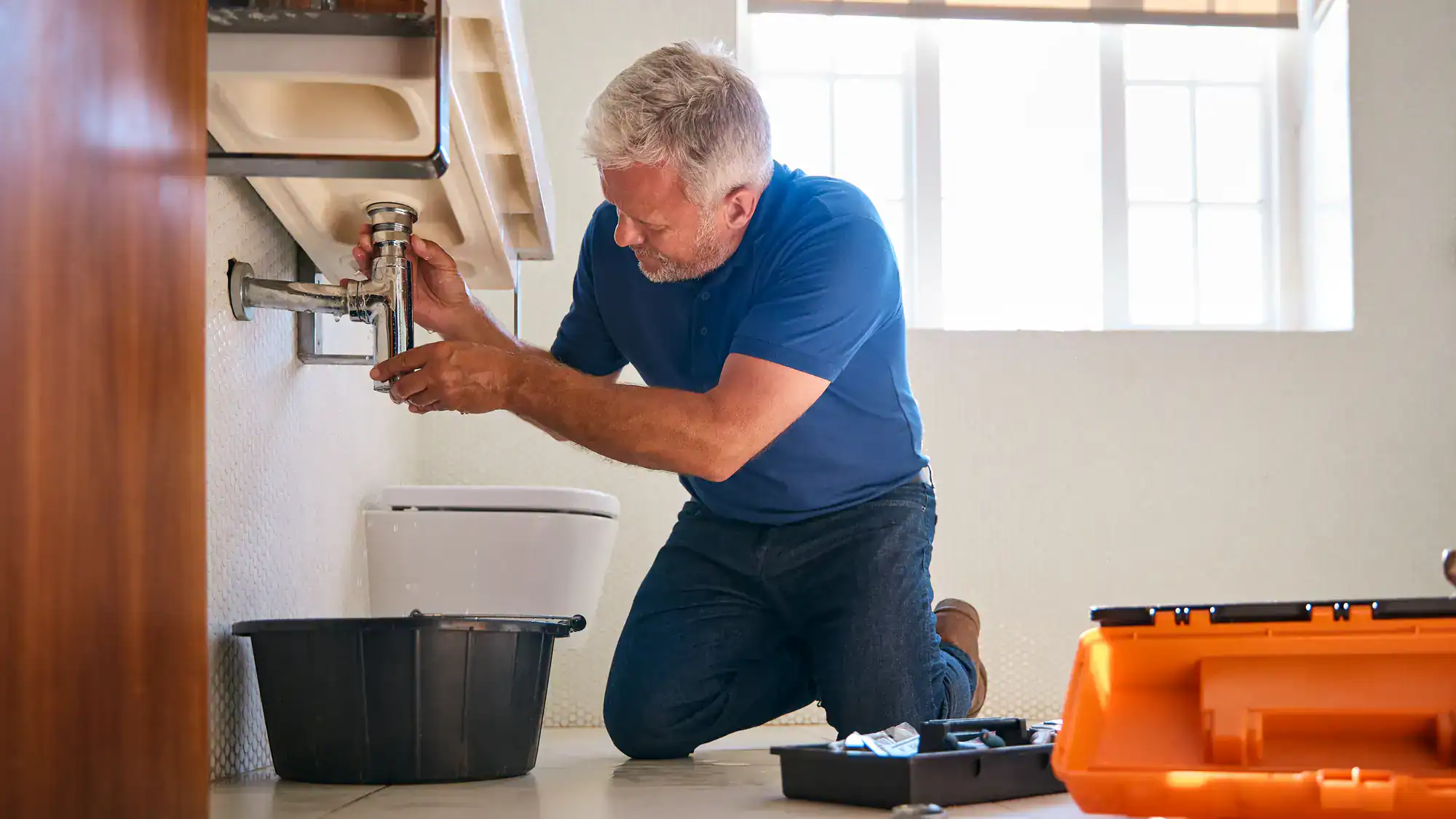
Here’s something that catches a lot of Alachua County homeowners off guard: the same subtropical climate that makes Gainesville comfortable most of the year also makes water damage significantly more destructive than it would be in a drier region.
Relative humidity in Gainesville runs between 70 and 80 percent on average — year-round. When water enters a wall cavity, soaks into drywall, or saturates wood framing, that moisture doesn’t dry out on its own the way it might in a dry climate. Instead, it lingers. And in those warm, humid conditions, mold colonies can establish themselves within 24 to 48 hours of initial exposure. By the time you see visible mold, the problem is already well underway inside the structure.
The financial implications are significant. The average water damage insurance claim runs around $13,954. But when mold remediation is added on top of structural repairs, costs can climb well beyond $20,000. And that’s before factoring in the disruption of living out of your home during remediation.
Alachua County’s clay-heavy soil adds another layer of risk that’s specific to this area. Unlike sandy soil, clay expands when wet and contracts when dry — a cycle that repeats with every rainy season. Over time, this ground movement stresses underground pipes and sewer lines in ways that homeowners rarely anticipate until something fails. It’s one of the reasons we see sewer line issues alongside burst pipe calls in this area, particularly in older neighborhoods where the infrastructure hasn’t been updated in decades.
Hurricane season compounds everything. When a tropical system moves through North Central Florida — as Hurricane Idalia did in 2023 — the combination of heavy rainfall, potential flooding, and power outages can overwhelm drainage systems, back up sewer lines, and leave homes with water intrusion problems that aren’t immediately visible. If your home took on water during a storm event, getting a professional inspection before assuming everything dried out on its own is a smart move.
Most plumbing emergencies don’t come out of nowhere. There are usually signs — sometimes subtle, sometimes obvious — that something is wrong before a pipe actually fails. Catching these early is the difference between a repair call and an emergency call.
A sudden unexplained spike in your water bill is one of the clearest signals. If your household usage hasn’t changed but your bill has jumped, you likely have a leak somewhere in the system. The EPA estimates that 10 percent of homes leak more than 90 gallons of water per day — often from slow leaks that go unnoticed for months. In Gainesville, where water bills are already influenced by irrigation and seasonal usage, an unexpected increase is easy to rationalize away. Don’t.
Low water pressure that develops gradually, rather than appearing suddenly, often points to a slow leak or a buildup inside aging pipes. Discolored water — brown or rust-colored — suggests corrosion inside galvanized steel pipes, which are common in Gainesville homes built before the 1980s. Water stains on ceilings or walls, even old-looking ones, indicate that moisture has been present at some point and may still be active inside the structure.
Sounds matter too. A hissing sound near a wall or under a floor when no water is running often indicates a pressurized leak inside the pipe system. A gurgling sound from drains can signal a sewer line issue. These aren’t things to monitor and revisit in a few weeks — they’re things to have inspected before they escalate.
The homes most at risk in Alachua County are those built between the 1960s and 1990s, particularly those that haven’t had a plumbing inspection in the past decade. Older copper pipes develop pinhole leaks over time. Polybutylene pipes — installed widely through the late 1980s and early 1990s — are known to fail without warning. If your home falls into this category and you’ve never had a plumber assess the overall condition of your pipes, that conversation is worth having before an emergency forces it.
When water is actively damaging your home, the most important thing you can do is act quickly — shut off the supply, document what you see, and get a licensed plumber on-site as fast as possible. Everything else follows from those three steps.
We’re a family-owned, licensed, and insured plumbing company serving Gainesville and across Alachua County. We respond to emergency calls around the clock — not theoretically, but actually. When you call at 2am, someone answers. We give you a straightforward price before any work begins, and we show up with the equipment to diagnose the problem correctly the first time.
If you’re dealing with an emergency water leak right now, or you want to get ahead of the warning signs before something fails, reach out to Dee-Rooter Plumbing, Sewer & Drain. Co. We’re local, we’re available, and we’ll tell you exactly what’s going on.
—
FAQs
Where is my main water shut-off valve located?
In most Alachua County homes, the main shutoff valve is near the water meter — often in a utility closet, garage, crawl space, or along an exterior wall facing the street. In older Gainesville neighborhoods, it’s worth locating this valve now, before an emergency, because valves in homes built in the 1960s through 1980s can seize up from years of disuse. If you can’t find it or it won’t turn, the meter shutoff near the street is your backup.
What should I do immediately when I discover a water leak?
Shut off the water first — either at the fixture isolation valve or the main shutoff. Then move valuables out of the affected area and take photos of everything before cleanup begins. That documentation is critical if you’re filing a homeowner’s insurance claim. Then call us. In Alachua County’s subtropical climate, mold can begin growing within 24 to 48 hours of water exposure, so waiting until morning is rarely the right call.
How do I know if my water leak is a true emergency?
If water is actively flowing, spreading, or affecting electrical systems, it’s an emergency. Burst pipes, failed supply lines, water heater leaks at the base, and sewer backups all require immediate professional attention. A slow drip from a faucet can wait for a scheduled appointment — but anything that’s actively wetting floors, walls, or ceilings should be treated as urgent.
Does homeowner’s insurance cover emergency water leaks?
Generally, yes — if the damage is sudden and accidental, like a burst pipe. Insurance typically does not cover gradual leaks, damage from neglect, or flooding from outside the home (which requires separate flood insurance). Document everything with photos before cleanup begins, and keep records of any repair invoices. Your insurer will want that paper trail.
Can I do anything to prevent a plumbing emergency?
Knowing where your shutoff valves are is the single most useful thing you can do right now. Beyond that, watch for early warning signs: unexplained increases in your water bill, low water pressure, discolored water, or water stains on walls and ceilings. If your Alachua County home was built before 1995 and hasn’t had a plumbing inspection recently, scheduling one is a reasonable precaution — especially if you have polybutylene or galvanized steel pipes, which are common in older Gainesville homes and known to fail without much warning.
Summary:
Article details:
Share: