Not every clog needs a plumber — but some definitely do. Here's how to tell the difference and handle it right the first time.
You’ve plunged it. You’ve poured something down it. Maybe you even tried the baking soda trick you found online. And yet — the drain is still slow, still smelly, or backed up again two weeks later.
That’s a frustrating place to be. Most people don’t want to call a plumber for something that feels like it should be fixable with a $6 bottle from the hardware store. And sometimes, it is. But sometimes that $6 fix is quietly making things worse.
This guide walks you through what actually works, what doesn’t, and how to know when a drain problem has outgrown the DIY stage. If you’re in Alachua County, there are a few local conditions — sandy limestone soil, aggressive root systems, and older housing stock — that add wrinkles most generic guides never mention.
Shower drain clogs are almost always hair — sometimes combined with soap scum that acts like glue, binding everything together into a stubborn mass just below the drain cover. The good news is that most of these clogs sit close enough to the surface that you can reach them without tools or chemicals.
Start by pulling the drain cover and using a flashlight to see what you’re dealing with. A pair of needle-nose pliers or a plastic drain snake (the cheap, disposable kind with barbs) can pull out a surprising amount of debris. It’s unglamorous work, but it’s effective — and it doesn’t carry any risk of pipe damage.
Where people go wrong is skipping straight to chemical drain cleaners when the mechanical approach feels too unpleasant. That’s worth thinking twice about, which leads to the next question most people have.
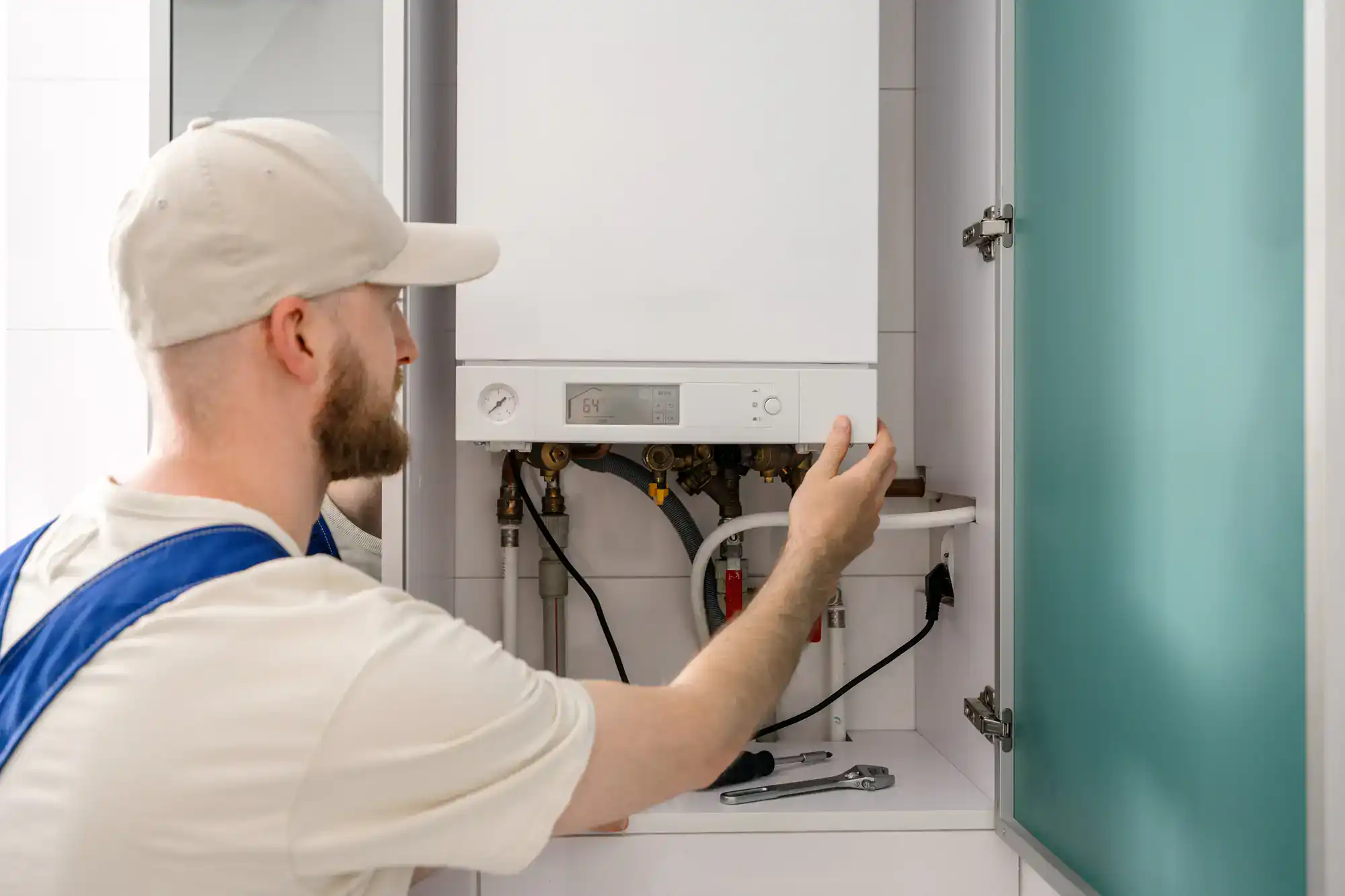
Chemical drain cleaners like Drano work by generating heat and a caustic reaction inside your pipe. For a fresh, soft clog, they can be effective. But they come with real tradeoffs that most product labels don’t highlight.
In older homes — and Alachua County has plenty of them, particularly in the neighborhoods near UF and throughout East Gainesville — pipes are often galvanized metal or original clay. Repeated use of chemical cleaners accelerates corrosion in those materials. Even in newer homes with PVC pipes, the heat generated by some chemical formulas can soften fittings over time. And if we need to come out after you’ve used chemicals, we have to work around whatever residue is still sitting in the pipe — which is a safety concern on top of a practical one.
Boiling water is another one to be careful with. It’s often recommended online as a natural, pipe-safe option, but it can warp or crack PVC — which is the standard pipe material in most homes built in the last few decades. Hot tap water is fine. Boiling, not so much.
The baking soda and vinegar method is safe, but it’s worth being honest about what it actually does. The fizzing reaction feels satisfying, but it’s not strong enough to dissolve hair, break up grease buildup, or clear soap scum. It’s a decent maintenance step for a drain that’s already flowing well — not a real solution for a clog.
For a shower drain that’s genuinely blocked, the most effective DIY approach is mechanical: a hand-operated drain snake or auger, available at any hardware store for under $30. You insert it, crank it past the clog, and pull the debris back out. It’s straightforward, and it doesn’t carry the pipe-damage risk that chemicals do. If you’ve cleared what you can reach and the drain is still slow, that’s usually a sign the clog is deeper — or that there’s more going on than a surface-level hair buildup.
A slow shower drain on its own usually means a localized clog. But if you’re noticing slow drains in more than one fixture at the same time — the shower, the bathroom sink, maybe the toilet draining sluggishly — that pattern points to the main sewer line, not individual drains. That’s a different problem entirely, and it’s not one a plunger or a hand snake is going to solve.
Throughout Alachua County, this kind of issue comes up more often than people expect, and the local geology is part of the reason. The sandy limestone soil beneath much of Gainesville causes pipe joints to shift and settle over time, especially in homes built on slab foundations. Those small gaps in joints are exactly where tree roots find their way in. Florida’s trees — oaks, magnolias, ficus — grow aggressively, and their roots are naturally drawn toward the moisture around underground pipes. Once roots get inside a line, they grow, and they keep growing until the line is partially or fully blocked.
If you’re in an older home anywhere in Alachua County, or if you’ve got mature trees in your yard, root intrusion is a genuine possibility — not a worst-case scenario. The only way to know for certain is a camera inspection, where we run a small camera through the line and see exactly what’s there. It’s not something you can diagnose from the surface, and it’s not something a chemical cleaner or a hand snake is going to fix.
The other scenario worth knowing about: if multiple fixtures are slow after a heavy rain, that can mean the drainage system is being overwhelmed. During Gainesville’s hurricane season — June through November — sudden high-volume rainfall events can expose partial clogs that were manageable under normal conditions. What was a slow drain in July can become a full backup by August if it goes unaddressed.
Want live answers?
Connect with a Dee Rooter Plumbing expert for fast, friendly support.
Kitchen and bathroom sinks fail for different reasons, and the approach that works for one won’t always work for the other. Bathroom sink clogs are almost always hair and toothpaste buildup near the pop-up stopper — the small drain plug that’s operated by a rod behind the faucet. Pulling that stopper out and cleaning it takes about two minutes and fixes the problem more often than not.
Kitchen sink clogs are a different story. Grease is the main culprit, and it behaves differently than hair. Grease goes down the drain warm and liquid, coats the pipe walls as it cools, and gradually narrows the pipe over time. Add food particles, dish soap residue, and a few years of regular cooking, and you’ve got a slow drain that gets slower until it stops.
The starting point for any sink drain problem is the P-trap — the curved section of pipe under the sink. It’s designed to hold a small amount of water to block sewer gases, but it’s also where debris collects. Cleaning it out is a straightforward job that requires nothing more than a bucket and a wrench.
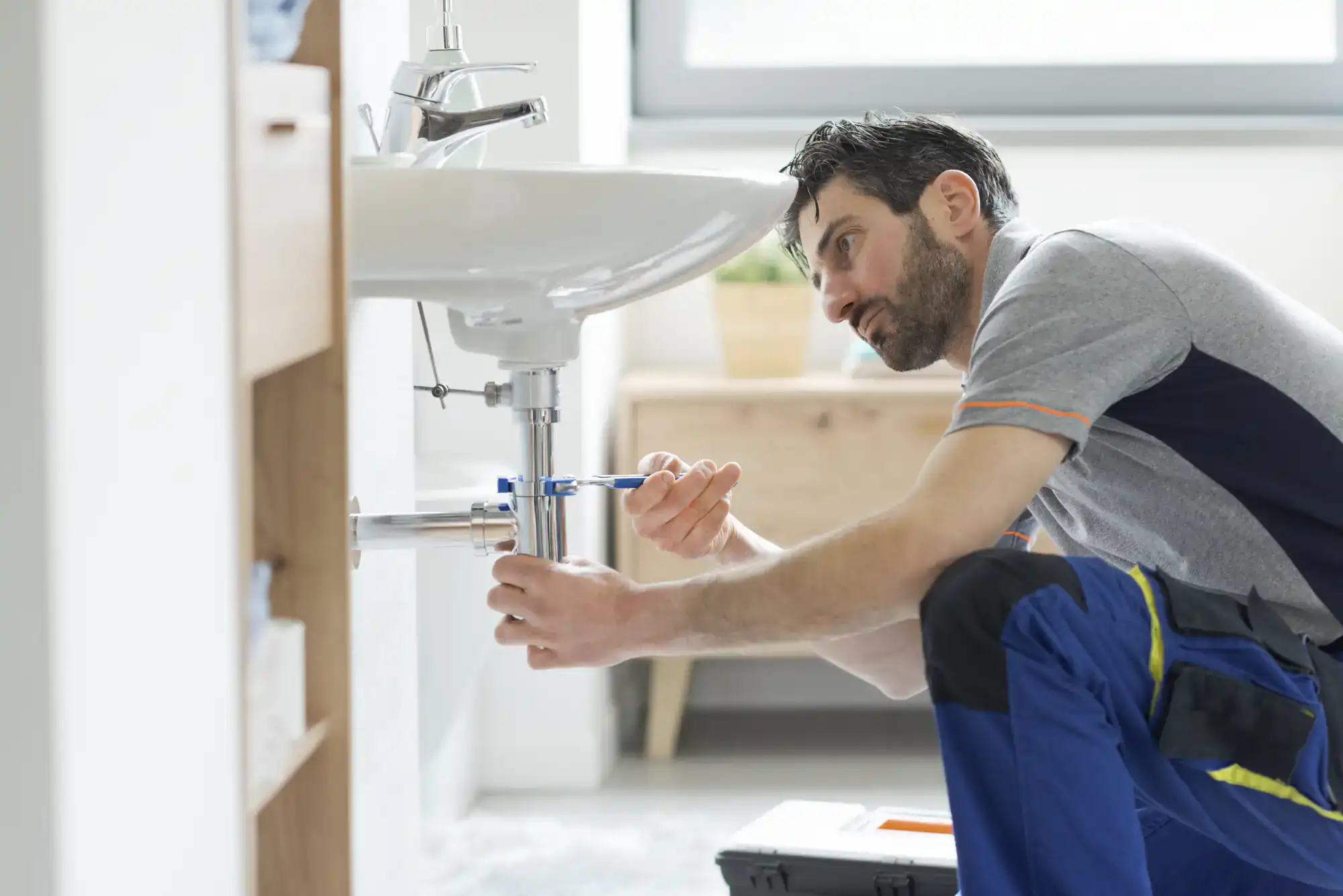
If clearing the P-trap doesn’t do it, the clog is further down the line — and that’s when a drain snake becomes the right tool. For kitchen sinks, a hand-operated auger works well for clogs within a few feet of the drain. For clogs that are deeper in the line, a longer motorized snake is more effective, though that’s typically where most homeowners hand it off to us.
One thing worth knowing about kitchen drain clogs specifically: snaking will break through the clog and restore flow, but it doesn’t clean the pipe walls. Grease and biofilm that’s been building up for years stays on the interior of the pipe, and the line will slow down again — sometimes within weeks. Hydro-jetting is the method that actually clears pipe walls. It uses high-pressure water to scour the interior of the pipe clean, removing grease, scale, and buildup that a snake can’t touch. It costs more than a standard snaking service, but for a kitchen drain with a history of recurring clogs, it tends to be the fix that actually holds.
For Alachua County rental properties — and there are a lot of them given the University of Florida’s enrollment — this matters even more. High-turnover rentals accumulate years of grease and debris between tenants, and a quick snake job often just delays the next call. Property managers who’ve dealt with the same kitchen drain issue in the same unit more than once usually find hydro-jetting is the more cost-effective long-term answer.
A few things that are worth avoiding in the kitchen: chemical drain cleaners are particularly ineffective on grease clogs because they don’t have the physical force to move a solidified buildup. They may partially clear the path, but they leave residue on the pipe walls and don’t address the root of the problem. And in homes with older pipes — which includes a significant portion of Alachua County’s housing stock, especially in communities like High Springs, Alachua city, and older Gainesville neighborhoods — repeated chemical use causes real damage over time.
Most plumbing sources recommend having your main sewer line professionally cleaned every 18 to 24 months as a baseline. For homes in Alachua County, there are a few local factors that make more frequent maintenance worth considering.
If your home has mature trees nearby — which describes most established neighborhoods in Gainesville and the surrounding county — annual inspection makes sense. Root intrusion doesn’t announce itself until it’s already causing problems, and catching it early is significantly cheaper than dealing with a full blockage or a cracked line. A camera inspection once a year gives you a clear picture of what’s happening underground without any guesswork.
Homes built before the 1990s are also worth paying closer attention to. Older pipes, whether galvanized metal, cast iron, or clay, are more prone to scale buildup, corrosion, and joint separation than modern PVC. They respond poorly to chemical cleaners and may need more frequent professional attention to stay clear. If you’re in an older home near the UF campus, in East Gainesville, or in one of the county’s smaller towns, it’s worth knowing what material your pipes are made of before you reach for a bottle of drain cleaner.
For rental properties, the calculus is a little different. Tenant turnover creates irregular maintenance cycles, and drain problems often go unreported until they’re significant. Scheduling a professional drain cleaning between tenancies — or at least every 12 months for high-occupancy units — tends to prevent the kind of emergency calls that cost far more than routine service.
The broader point is that drain cleaning is genuinely cheaper than drain repair. A standard professional cleaning runs $100 to $275 for most residential clogs. A sewer backup, by contrast, can mean $500 to $2,000 or more in water damage restoration before you’ve even addressed the underlying pipe issue. Preventive maintenance isn’t just good practice — in Florida’s climate, with its humidity, tree growth, and seasonal rainfall, it’s the kind of thing that pays for itself.
DIY drain cleaning has a real place. For a fresh clog close to the surface, a hand snake or a quick P-trap clean is often all you need. But when the clog keeps coming back, when more than one fixture is slow at the same time, when you’re dealing with a smell that won’t go away, or when you’ve already tried everything and nothing has held — that’s when continuing to troubleshoot on your own starts costing more than it saves.
The honest answer is that most drain problems are straightforward to fix when we get to them early. It’s the ones that get ignored, partially treated, or misdiagnosed that turn into expensive repairs.
If you’re in Gainesville or anywhere in Alachua County and you’re past the point where DIY is the right call, we offer same-day service, upfront pricing, and free estimates — no surprises, no pressure. Give us a call and we’ll tell you exactly what you’re dealing with.
Summary:
Share: