Not all tankless systems work the same way — or suit every home. Here's what Alachua County homeowners actually need to know before making a decision.
If you’ve been researching tankless water heaters long enough, you’ve probably hit a wall of specs, efficiency ratings, and conflicting opinions. It gets complicated fast — especially when terms like “tankless boiler,” “combi-boiler,” and “on-demand water heater” all seem to mean slightly different things depending on where you look.
Here’s the short version: a tankless boiler heats water on demand, without storing it in a tank. Some systems handle domestic hot water only. Others — combi-boilers — handle both hot water and space heating from a single unit. Which one makes sense for your home in Alachua County depends on a few factors worth understanding before you spend a dime.
A standard tank water heater keeps 40 to 60 gallons of water hot around the clock — whether you’re using it or not. That constant energy draw is called standby heat loss, and it’s one of the main reasons homeowners start looking at alternatives. A tankless system only fires up when you turn on a faucet, which is why the U.S. Department of Energy puts the efficiency advantage at 8% to 34% over conventional tank units.
The space difference is also significant. A traditional 50-gallon tank can be 60 inches tall and nearly two feet wide. A tankless unit is roughly the size of a large computer and mounts to the wall. For older Gainesville homes — the 1960s and 70s ranch-style builds you see throughout midtown and the neighborhoods around UF — that reclaimed space matters.
Here in Alachua County, there’s another advantage that most national content overlooks: groundwater enters your home at 65 to 75°F, compared to 40°F in northern states. That smaller temperature rise means your tankless unit has to work less to hit shower temperature, which translates to better performance and more hot water per BTU from the same equipment.
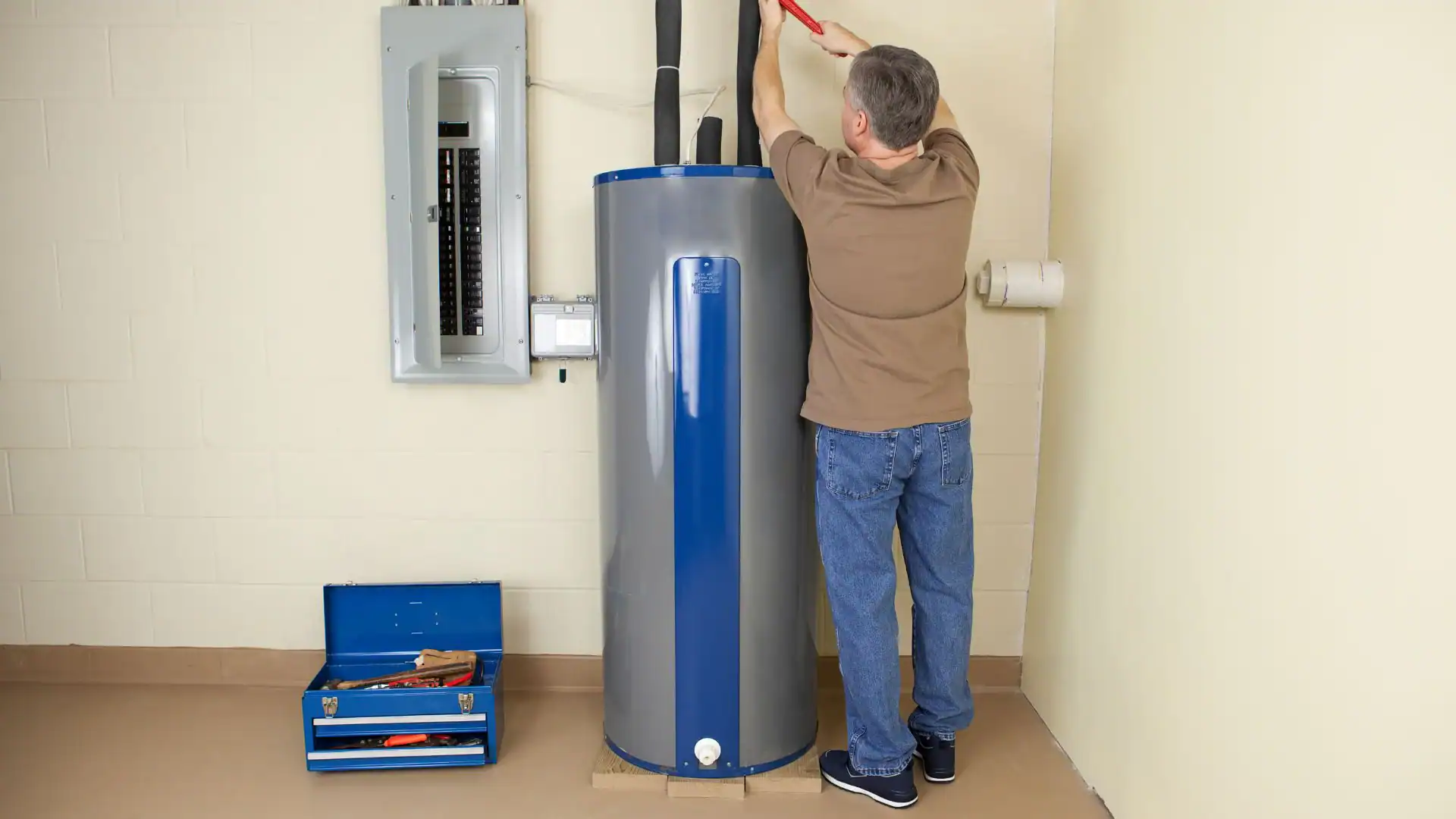
If your home is in Newberry, Archer, Hawthorne, High Springs, or anywhere else outside Gainesville Regional Utilities’ natural gas service area, you’re likely on propane — and that changes the conversation around tankless installation in a few important ways.
Propane tankless water heaters are excellent performers. They heat water at high flow rates, work efficiently in Florida’s climate, and last well over 20 years with proper maintenance. But indoor installation comes with requirements that can’t be skipped. Every indoor gas-fired tankless unit must be vented to the outside — no exceptions. Non-condensing models exhaust at temperatures up to 300°F, which means the venting material has to be Category III stainless steel. Condensing models run cooler and can use PVC or CPVC, but they produce condensate that needs a proper drain.
Propane operates at a different gas pressure than natural gas — typically 10 to 11 inches of water column, versus 7 for natural gas — and requires specific orifice sizing. If a plumber installs a natural gas unit on a propane line without making that conversion, you’ll have problems. We check gas pressure with a digital manometer and review your existing line capacity as standard parts of a professional installation, not optional add-ons.
Florida Building Code requires a permit for every water heater installation, including gas-fired tankless units. That permit process involves submitting manufacturer spec sheets confirming third-party equipment certification, and the installation must comply with both the Florida Building Code and NFPA 54, the National Fuel Gas Code. Gas supply lines serving a high-BTU tankless unit need capacity for at least 200,000 BTU per hour — older flex lines or undersized supply runs often need upgrading. If you hire someone who doesn’t pull a permit, you’re taking on real risk: voided warranties, insurance complications, and potential problems if you ever sell the home.
We’ve been navigating Alachua County’s permit process for six-plus years. We know what the building department expects, and we handle all of it — the application, the inspection, the compliance documentation — so you don’t have to figure it out yourself.
Condensing tankless water heaters get a lot of attention because of their high efficiency ratings — up to 96 to 98% UEF, meaning nearly all the fuel burned converts to usable heat. That’s impressive. But non-condensing units aren’t the inferior option people sometimes assume they are.
A non-condensing tankless water heater uses a single heat exchanger and exhausts hot gases out through the vent. Efficiency typically runs between 80 and 85%, which is still meaningfully better than a conventional tank heater. For many homeowners, that gap in efficiency between condensing and non-condensing doesn’t justify the price difference — especially when the installation circumstances favor the simpler system.
Here’s a practical example: if your home already has Category III stainless steel venting from a previous non-condensing unit, a new non-condensing replacement can often use that existing infrastructure. A condensing unit, by contrast, requires a condensate drain line — typically no more than two inches higher than the base of the unit — and uses different venting material entirely. In some installations, adding that drain line is straightforward. In others, it means more labor, more materials, and a higher overall cost that may not pay back in energy savings within a reasonable timeframe.
Budget is a real factor too. Non-condensing units cost less upfront, and for households with moderate hot water demand — a couple or a small family, not a six-person household running multiple showers simultaneously — the performance difference is minimal in day-to-day use. The honest recommendation isn’t always the most expensive system. It’s the one that fits your home’s existing setup, your actual hot water usage, and your budget. That’s the kind of assessment we do before we ever quote you a number.
Want live answers?
Connect with a Dee Rooter Plumbing expert for fast, friendly support.
Florida’s climate makes outdoor electric tankless water heaters a genuinely practical option — not just a niche product. No venting required, installation is typically simpler than indoor gas units, and modern outdoor units are built to handle humidity, rain, and the occasional hard freeze that hits Alachua County a few nights a year. The built-in freeze protection on most current models handles north Florida winters without additional accessories.
The key is understanding what these systems are well-suited for. An outdoor electric tankless unit is an excellent choice for a pool house, an outdoor kitchen, a workshop sink, a garage utility area, or a guest cottage that doesn’t need full whole-house hot water capacity. They’re also used for RV hookups and supplemental hot water in homes where the main system can’t quite keep up during high-demand periods.
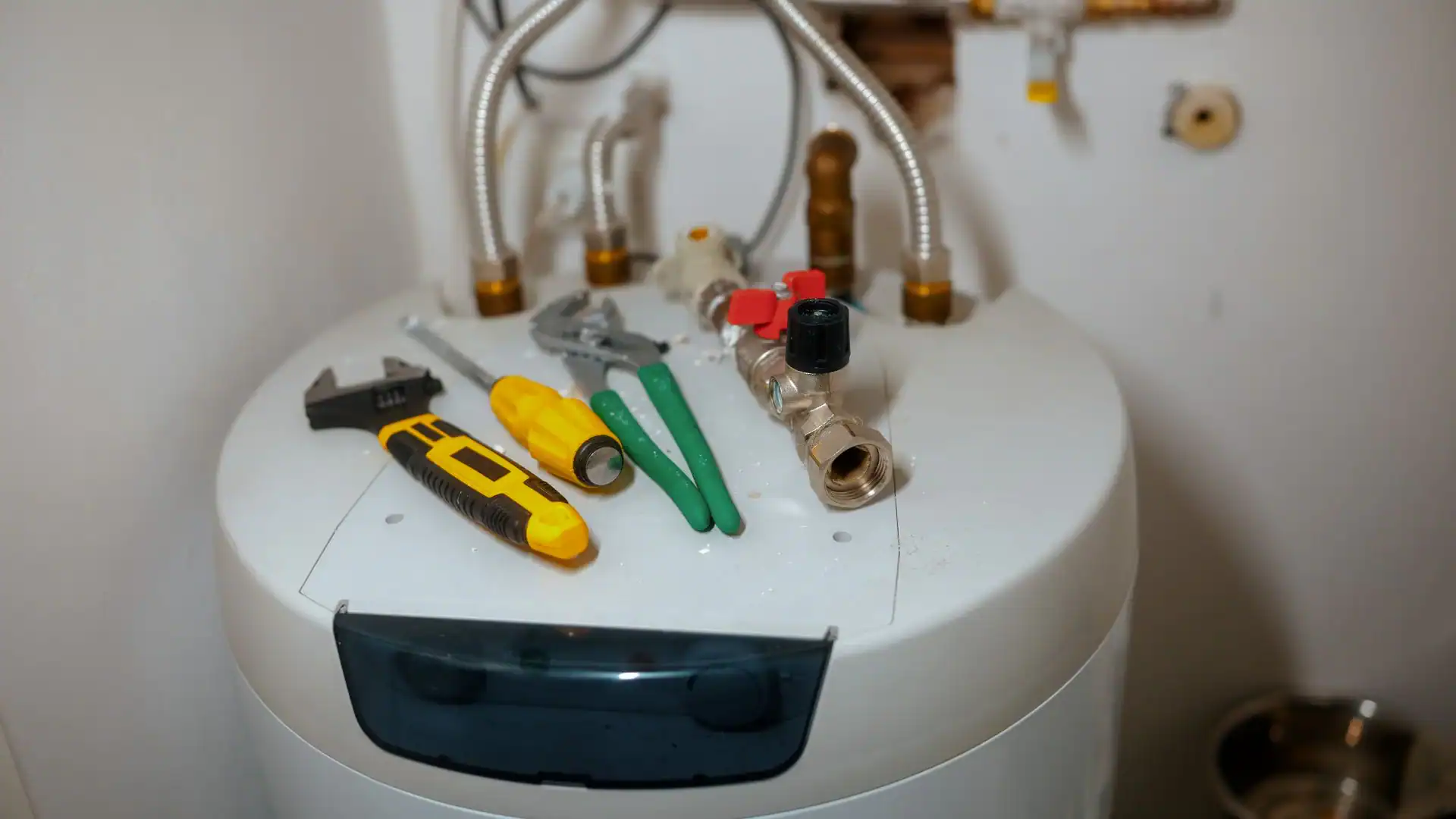
If you’ve been shopping online and come across 110-volt tankless water heaters at surprisingly low prices, it’s worth understanding exactly what you’re looking at before you buy one expecting it to replace your main water heater.
A 110-volt unit typically delivers between 0.5 and 1.5 gallons per minute. A standard showerhead uses 1.0 to 2.0 GPM at low flow — and older showerheads can run significantly higher. So a 110-volt unit isn’t going to power a shower. What it will do is provide instant hot water at a single point of use: a bathroom sink, an outdoor wash station, a garage utility sink, or an RV connection. For those applications, it’s a clean, efficient solution that doesn’t require upgrading your electrical panel or running new high-voltage wiring.
When the demand goes beyond a single fixture, you’re looking at 240-volt territory. A whole-house electric tankless water heater typically draws 18,000 to 36,000 watts — that’s 240-volt, dedicated-circuit work that requires a licensed electrician and a permit. A 240-volt unit can handle 2 to 5 GPM, which covers simultaneous uses across the home. If you’re replacing a tank water heater as your primary system, a 110-volt unit is not the answer, no matter how appealing the price tag looks.
The honest advice is this: if you have a specific single-point application and limited electrical infrastructure, a 110-volt unit may be exactly right. If you’re trying to solve a whole-house hot water problem, we’ll tell you that upfront and recommend what actually will.
The DIY appeal is understandable. Tankless water heaters look manageable on YouTube, and the potential to save on labor costs is real. But in Florida, the legal and practical picture is more complicated than it looks on a tutorial.
Florida law requires a licensed plumbing contractor to pull permits for water heater installations — and for gas-fired systems, the contractor must be specifically licensed and knowledgeable about gas work. Not every plumber qualifies. If someone installs a gas tankless unit without a permit, or if the permit is pulled by a contractor who isn’t properly licensed for gas systems, the consequences can include failed inspections, voided manufacturer warranties, and complications with homeowner’s insurance. If you sell the home later, unpermitted work is a disclosure issue that can derail a sale or reduce your negotiating position.
On the technical side, a gas tankless installation involves verifying gas line capacity, checking supply pressure with a digital manometer, sizing the venting run correctly (each 90-degree elbow counts as five equivalent feet), ensuring the vent terminal clears the roof and any adjacent structures by the required distances, and confirming a dedicated 120-volt electrical receptacle is within three feet of the unit. Condensing units add condensate drain requirements on top of that. These aren’t steps you want to improvise.
We’ve seen what happens when tankless units are installed without proper sizing or venting — units that short-cycle, exhaust gases that don’t clear properly, and gas pressure issues that affect performance from day one. A solid installation done right the first time, with a permit and a passing inspection, protects your investment and gives you the manufacturer warranty you paid for. That’s what we show up to do.
The right tankless boiler for your home isn’t the one with the highest efficiency rating on paper — it’s the one that fits your fuel source, your existing infrastructure, your hot water demand, and your budget. For some Gainesville homeowners, that’s a condensing propane unit with full permit compliance. For a rural property in Archer or Hawthorne, it might be a non-condensing indoor unit on an upgraded gas line. For a backyard workshop or pool house, an outdoor electric unit might solve the problem cleanly and affordably.
What matters is getting an honest assessment before you commit to anything. We’ve been doing this work in Gainesville and across Alachua County for over six years — family-owned, no franchise overhead, and no interest in selling you more system than you need.
If you’re ready to figure out what actually makes sense for your home, reach out to Dee-Rooter Plumbing, Sewer & Drain. Co. for a free estimate. We’ll take a look, give you a straight answer, and handle everything from the permit application to the final inspection.
Summary:
Article details:
Share: