Your heat pump water heater needs more attention than most people realize. Here's what to maintain, when to call a pro, and what it costs in Alachua County.
Most homeowners don’t think about their water heater until there’s no hot water. That’s understandable — it’s one of those appliances that quietly does its job until it doesn’t. But heat pump water heaters are different from the old tank in the garage your parents had. They have more moving parts, more to maintain, and more to lose when that maintenance gets skipped.
The good news is that staying ahead of it isn’t complicated. You just need to know what to look for, what to leave to a professional, and how often each task actually matters. That’s what this guide covers.
A heat pump water heater works by pulling heat from the surrounding air and transferring it into your water — which is why it uses so much less electricity than a standard electric unit. But that heat pump mechanism means there are components involved that a traditional water heater simply doesn’t have: an air filter, an evaporator coil, a compressor, and a refrigerant circuit. Each of those needs attention.
The tank portion still behaves like a conventional storage water heater, which means sediment buildup, anode rod depletion, and pressure relief valve wear are all still on the table. You’re essentially maintaining two systems in one unit. That’s not a reason to panic — it’s just a reason to take the annual service visit seriously rather than skipping it.
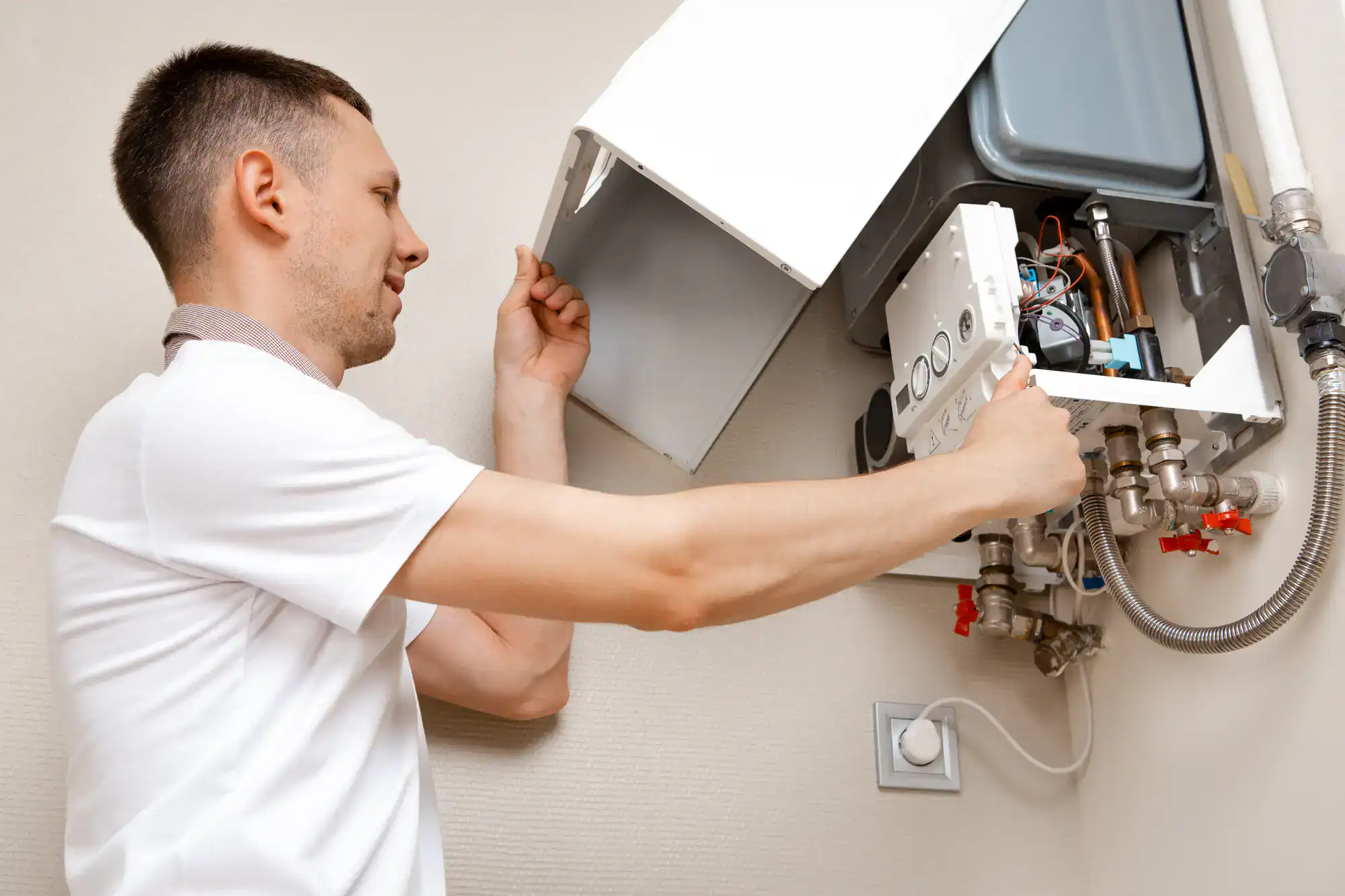
The air filter is the one task you can genuinely handle yourself. Most heat pump water heaters have a filter that should be cleaned every one to three months depending on how dusty your space is. It takes about five minutes, and a clogged filter can reduce efficiency by 5–15% on its own — sometimes enough to push the unit into electric resistance mode, which is far less efficient and essentially defeats the purpose of having a heat pump system.
Beyond the filter, the rest of the maintenance schedule is best handled by a licensed plumber once a year. A proper annual service visit should include flushing sediment from the tank, inspecting and testing the temperature and pressure relief valve, checking the anode rod, inspecting the evaporator coil, verifying refrigerant pressure, checking all electrical connections, and confirming the unit is operating in the right mode. That last point matters more than people realize — a heat pump water heater running in electric resistance mode all the time isn’t saving you anything on your energy bill.
The water drawn from the Floridan Aquifer in Alachua County runs moderately hard — somewhere in the range of 60 to 120 mg/L of calcium carbonate depending on your specific location. That mineral content is real, and it accumulates inside your tank over time. An annual flush isn’t a upsell. It’s genuinely necessary in Alachua County in a way it might not be in a soft-water market. Skipping it for a few years leads to sediment buildup that reduces heating efficiency, stresses the unit, and shortens its overall lifespan.
The anode rod — a sacrificial metal rod inside the tank that prevents corrosion — should be inspected every two to three years and replaced when it’s more than halfway depleted. Most homeowners have never heard of it. Most plumbers who do thorough work will check it as part of a standard visit and let you know where things stand.
Rheem is one of the most common water heater brands in Alachua County homes, and their tankless and hybrid heat pump lines — including the ProTerra series — are showing up in more and more households as homeowners upgrade older systems. They’re solid units. But they do have specific maintenance requirements that not every plumber is equally familiar with.
For Rheem tankless water heaters specifically, descaling is the most critical service task in this market. Because there’s no storage tank, water flows directly through a heat exchanger when you turn on the tap. In a hard-water area like Alachua County, mineral scale builds up on that heat exchanger over time. Left unchecked, it causes the unit to overheat, triggers error codes, reduces flow rate, and eventually leads to premature failure. A tankless water heater that should last 15 to 20 years can fail in half that time without annual descaling. The process involves running a food-safe descaling solution through the heat exchanger to dissolve mineral deposits — it typically takes an hour or two and should be done by someone who knows the specific flushing procedure for your model.
Rheem also has model-specific error codes, thermostat settings, and warranty requirements that matter when something goes wrong. Their manufacturer warranty on many units requires documented professional service to remain valid. That means if you skip the annual visit and something fails inside the warranty period, you could find yourself footing the bill for a repair that should have been covered. It’s worth keeping records of every service visit for exactly this reason.
We’ve been servicing Rheem systems in Alachua County for years, and the issues we see most often are predictable: scale buildup from the local water, filters that haven’t been cleaned in too long, and units running in the wrong operating mode because a setting got changed at some point. None of these are catastrophic if caught early. All of them get more expensive the longer they’re ignored.
Want live answers?
Connect with a Dee Rooter Plumbing expert for fast, friendly support.
Cost is usually the first question, and it’s a fair one. A professional service visit for a tankless or heat pump water heater in Alachua County typically runs somewhere between $100 and $300, depending on what’s included, the age and condition of the unit, and whether any parts need to be replaced during the visit.
That range can feel wide, so it helps to understand what’s actually driving the difference. A basic inspection with a filter clean and a quick system check sits at the lower end. A full service that includes descaling, anode rod replacement, T&P valve testing, and a detailed condition report sits higher. If we find something during the visit — a failing heating element, a depleted anode rod, a refrigerant issue — that work is additional.
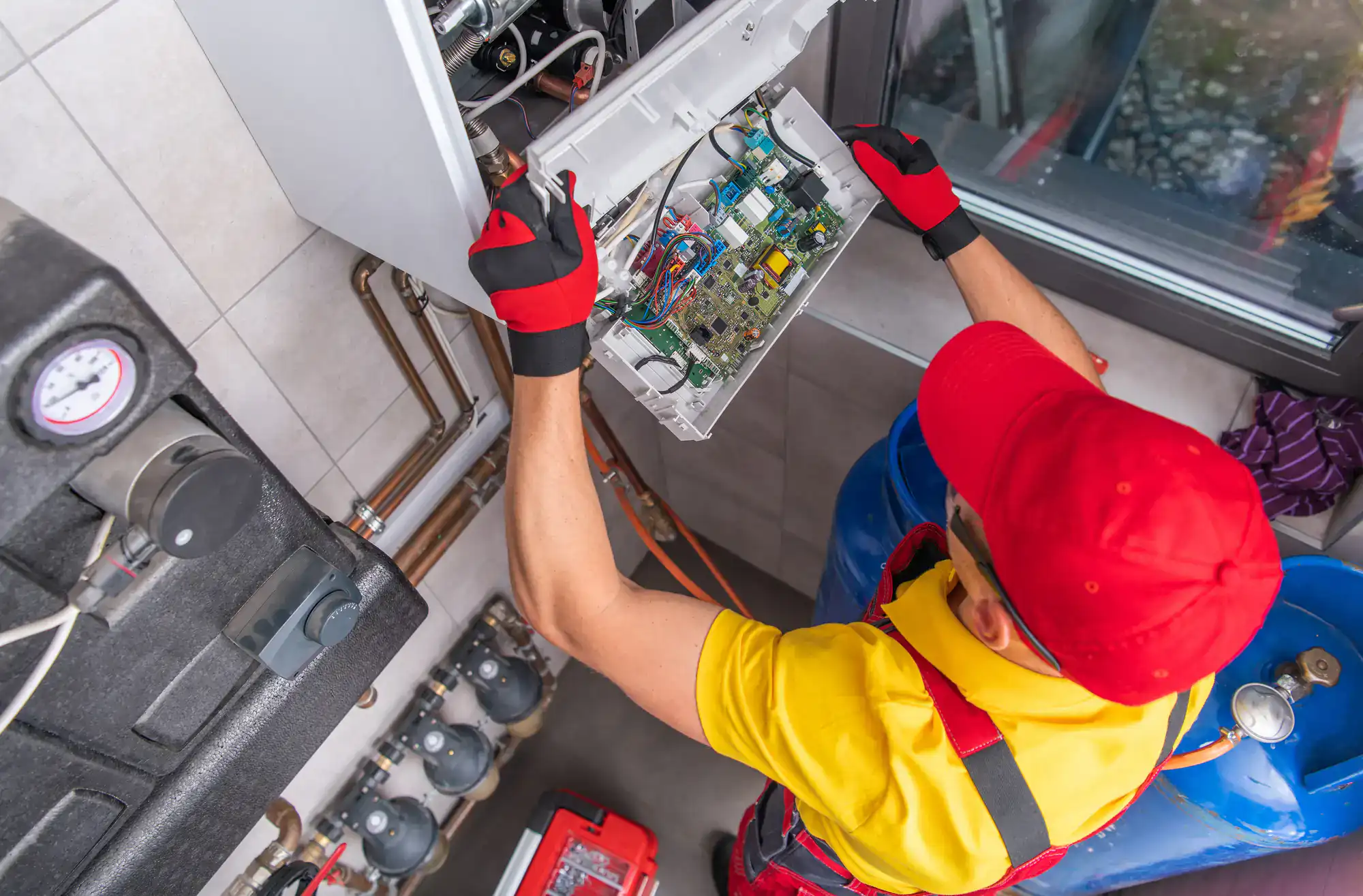
A few things push the cost up or down in a meaningful way. The type of system matters — heat pump water heaters involve more components than a standard tank unit, and tankless systems require descaling equipment and more time on-site. The age of the unit matters too. A newer system in good shape needs less intervention than a 10-year-old unit that hasn’t been serviced in three years.
Parts are the other variable. Anode rods, T&P valves, and inlet filters are relatively inexpensive components, but they do add to the total when they need replacing. We’ll show you what we found and explain what needs to be done versus what can wait — you shouldn’t feel like you’re being pushed into repairs you don’t understand.
One thing worth knowing: GRU (Gainesville Regional Utilities) rates run above the Florida state average, which means inefficiency in your water heater costs you more here than it would in many other markets. A heat pump water heater running at 80% efficiency instead of 100% because of a dirty coil or a clogged filter isn’t just a maintenance issue — it’s showing up on your monthly bill. The math on annual service paying for itself in energy savings is especially favorable for Alachua County homeowners on GRU.
It’s also worth checking whether GRU has any active rebate programs for energy-efficient water heater maintenance or upgrades. They’ve offered incentives in the past, and stacking a utility rebate with the federal IRA tax credit — which covers 30% of qualifying heat pump water heater installation costs up to $2,000 — can significantly reduce the out-of-pocket cost of upgrading to a more efficient system.
There’s a reasonable amount you can do yourself, and it’s worth knowing what that is rather than feeling like every task requires a service call. Cleaning the air filter on a heat pump water heater is genuinely DIY-friendly — your owner’s manual will show you exactly how, and it takes a few minutes. Visually checking for water around the base of the unit, making sure the area around the unit has adequate airflow, and keeping the space clear of debris are all things any homeowner can stay on top of.
Where it shifts is anything involving the refrigerant circuit, the T&P valve, descaling the heat exchanger, or diagnosing error codes. Refrigerant handling legally requires EPA Section 608 certification — a plumber without it cannot touch those components. T&P valve testing sounds simple but involves relieving pressure in a live system, and replacing one that fails during the test requires the right parts and know-how. Descaling a tankless system requires specific equipment and knowledge of the flushing procedure for your model. These aren’t tasks where the downside of getting it wrong is minor.
The other reason to have a professional handle the annual service is documentation. Many heat pump and tankless water heater warranties — Rheem included — require professional service records to remain valid. A DIY maintenance log doesn’t satisfy that requirement. If something fails within the warranty period and there’s no record of professional service, you may be looking at a repair bill that should have been covered. That’s an expensive lesson that’s easy to avoid.
For homeowners in Alachua County with older systems — particularly those in established neighborhoods where homes from the 1970s and 1980s are common — there’s also the question of whether the existing electrical panel and plumbing connections are set up correctly for a modern heat pump system. We can flag those issues during a service visit before they become emergencies. That kind of early catch is exactly what preventive maintenance is for.
If your heat pump or tankless water heater hasn’t been serviced in the past year, that’s your answer. Alachua County’s water hardness and GRU’s electricity rates make this a market where regular maintenance has a clear, measurable payoff — in system lifespan, in monthly energy costs, and in avoiding the kind of repair bills that come from problems that were building quietly for years.
The best time to schedule is before something goes wrong. A planned visit on a Tuesday morning costs significantly less than an emergency call on a Friday night — and we do offer emergency plumber availability for when things can’t wait.
We’re a family-owned plumbing company that’s been working in Alachua County for years. Our crew knows these systems, knows the local water, and gives you a straight answer about what your unit needs. If you’re ready to schedule service or just want to know where your water heater stands, reach out to us at Dee-Rooter Plumbing, Sewer & Drain. Co. — we’re easy to get ahold of and happy to help.
—
**Frequently Asked Questions**
**How much does tankless water heater service cost in Alachua County, FL?**
In Alachua County, a professional service visit for a tankless water heater typically runs between $100 and $300. The exact cost depends on what’s included — a basic inspection sits at the lower end, while a full service with descaling, parts replacement, and a detailed condition report runs higher. Because GRU electricity rates are above the Florida average, keeping your system running at full efficiency has a real impact on your monthly bill, which makes that annual service cost easier to justify.
**How often does a heat pump water heater need to be serviced?**
Once a year for professional service is the standard recommendation — and it’s what most manufacturers require to keep the warranty valid. In between annual visits, cleaning the air filter every one to three months is something you can handle yourself. In Alachua County, where the water from the Floridan Aquifer carries moderate mineral content, annual tank flushing is particularly important to prevent sediment buildup from shortening the unit’s lifespan.
**What are the signs that my heat pump water heater needs service?**
The most common signs are reduced hot water output, water that doesn’t get as hot as it used to, unusual noises from the unit, error codes on the display, or a noticeable increase in your electricity bill without a clear explanation. Any of these is worth a call to us. Some of these symptoms point to minor issues that are inexpensive to fix — but they can also be early indicators of something more serious developing.
**Does a heat pump water heater qualify for a federal tax credit?**
Yes. Under the Inflation Reduction Act, the Energy Efficient Home Improvement Credit covers 30% of the cost of a qualifying ENERGY STAR-certified heat pump water heater installation, up to $2,000 per year. If you’re considering upgrading your current system, that credit — potentially combined with a GRU rebate — can significantly reduce what you pay out of pocket. We can confirm whether the specific unit you’re looking at qualifies.
**Can I do any heat pump water heater maintenance myself?**
Some of it, yes. Cleaning the air filter every one to three months is straightforward and genuinely makes a difference. Keeping the area around the unit clear and watching for any signs of leaks are also things any homeowner can do. But descaling, refrigerant checks, T&P valve testing, and anode rod inspection should be handled by a licensed professional — both for safety reasons and to keep your warranty intact.
Summary:
Article details:
Share: